
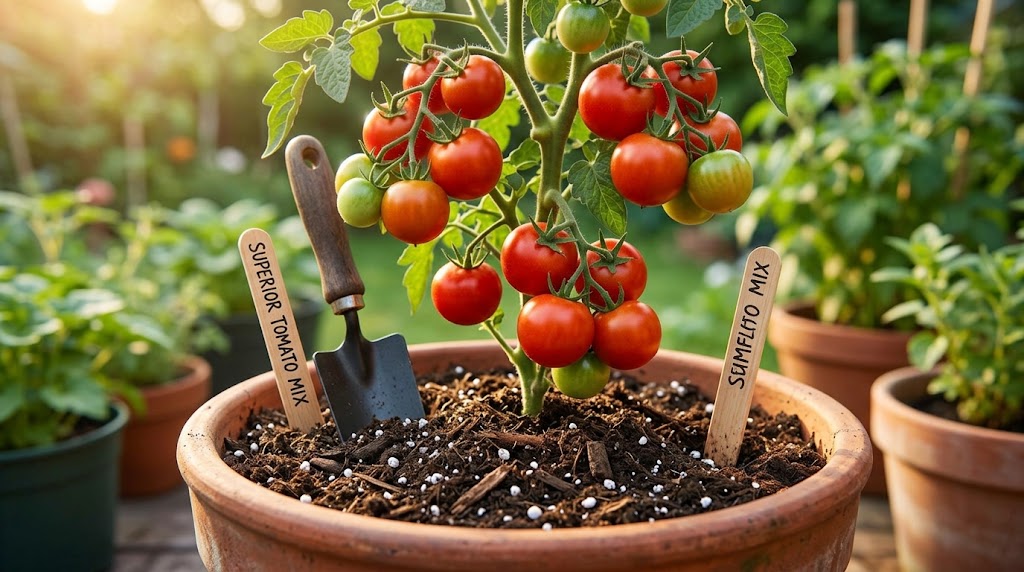
The best soil for tomatoes in containers is one that is loose such as sandy loam (aerated), is packed with organic matter, is well-drained but also can retain moisture, has rich in essential nutrients like potassium and phosphorous and lastly is slightly acidic with a pH ranging between 6 to 6.8.
Good soil is the foundation for growing healthy tomatoes, Specially when it grows in containers. The advantage of growing tomatoes in containers is that you will have complete control of the soil you will use. The type of soil that you use directly affects the taste and general health of your tomatoes. If the soil is not perfect, you will have to work very hard when taking care of your tomatoes as opposed to when you use quality soil.
Potting soil on the other hand is extremely great for small gardens and pot planting. It is free of weeds and crop diseases. Furthermore, this kind of soil drains well and keeps a great pH value to the plant. The soil is well loose and great in texture too.
Main functions of potting soil are:
- Provide adequate air for the roots for growth.
- Preserves moisture and nutrients for the plant, in this case tomato plant
- Lower risks of diseases
Quick Comparison Table
| Product | Base Material | Key Ingredients | Best For |
| Perfect Plants Organic Mix | Peat moss, coir, perlite | Mycorrhizae, worm castings, pine bark | All-around container garden use |
| Burpee Organic Potting Soil | Coconut coir base | OMRI listed; 3-month slow-release food | Low-maintenance organic feeding |
| Proven Winners Premium Soil | Peat moss, perlite, bark | Dolomite lime for pH control, wetting agent | Deep root growth & aeration |
| FoxFarm Ocean Forest | Humus, peat, perlite | Bat guano, earthworm castings, fish/crab meal | High-fertility, ready-to-use potting |
| Wonder Soil Premium Mix | Compressed coco coir | Expands 7x; worm castings, kelp, mycorrhizae | Compact storage & easy transport |
| Miracle-Gro Expand Mix | Concentrated coir | Expands 3x; holds 50%+ more water, fertilizer | Reduced watering frequency |
| Plant Magic Organic Soil | Compressed coir block | Expands 4x; disease-suppressing bacteria | Consistent moisture retention |
| SunGro Black Gold Mix | Peat moss, perlite, pumice | Worm castings; lab-tested quality | Maximum aeration for healthy roots |
| Michigan Peat Soil Mix | Dark reed sedge peat | Fine texture, high water retention | Budget base soil or amendment |
| Good Earth Organics Zen Blend | Peat, perlite, pumice | OMRI listed; alfalfa meal, worm castings | Targeted tomato-specific growing |
1. Organic Potting Mix by Perfect Plants for All Plant Types
Product Specs: Organic mix · Perlite, coconut coir, peat moss base · Enriched with worm castings, mycorrhizae, composted pine bark · Suitable for indoor/outdoor use

A versatile all-purpose organic mix built around perlite, coconut coir, and peat moss, boosted with worm castings and mycorrhizae for root protection and nutrient uptake. Works well beyond tomatoes — suitable for vegetables, herbs, and most edible plants.
Pros:
- Mycorrhizae fungus protects roots and boosts yields without added fertilizer
- Worm castings strengthen roots and help remove toxins
- Good drainage management reduces disease risk
- Heavy-duty sealed bags make storage and transport easy
Cons:
- No listed pH range, so testing before use is recommended
Verdict: A solid, nutrient-rich all-rounder if you want one bag that works across your whole container garden, not just tomatoes.
2. Burpee, Premium Organic Potting Natural Soil Mix Food Ideal for Container Garden-Vegetable
Product Specs: Coconut coir base · OMRI Listed for organic use · Slow-release Burpee plant food (feeds up to 3 months) · Indoor/outdoor use

It is formulated with plant food and coconut coir to promote seed and root growth for flowers, vegetables, and herbs, and is OMRI Listed for organic use. The mix feeds plants instantly, then continues with a slow-release plant food for up to three months, cutting down on how often you need to fertilize container tomatoes.
Pros:
- OMRI-certified for organic growing
- Built-in slow-release feeding lasts up to 3 months, less frequent fertilizing
- Coconut coir helps hold the right amount of water for potted plants
Cons:
- Built-in fertilizer means less control over feeding schedule/timing
Verdict: A trusted, low-maintenance option if you want a mix that feeds itself for months without needing a separate fertilizer routine.
3. Proven Winners Premium All Purpose Potting Soil
Product Specs: Professional-grade blend · 50-60% Canadian sphagnum peat moss · Processed softwood bark, perlite, dolomite lime, wetting agent
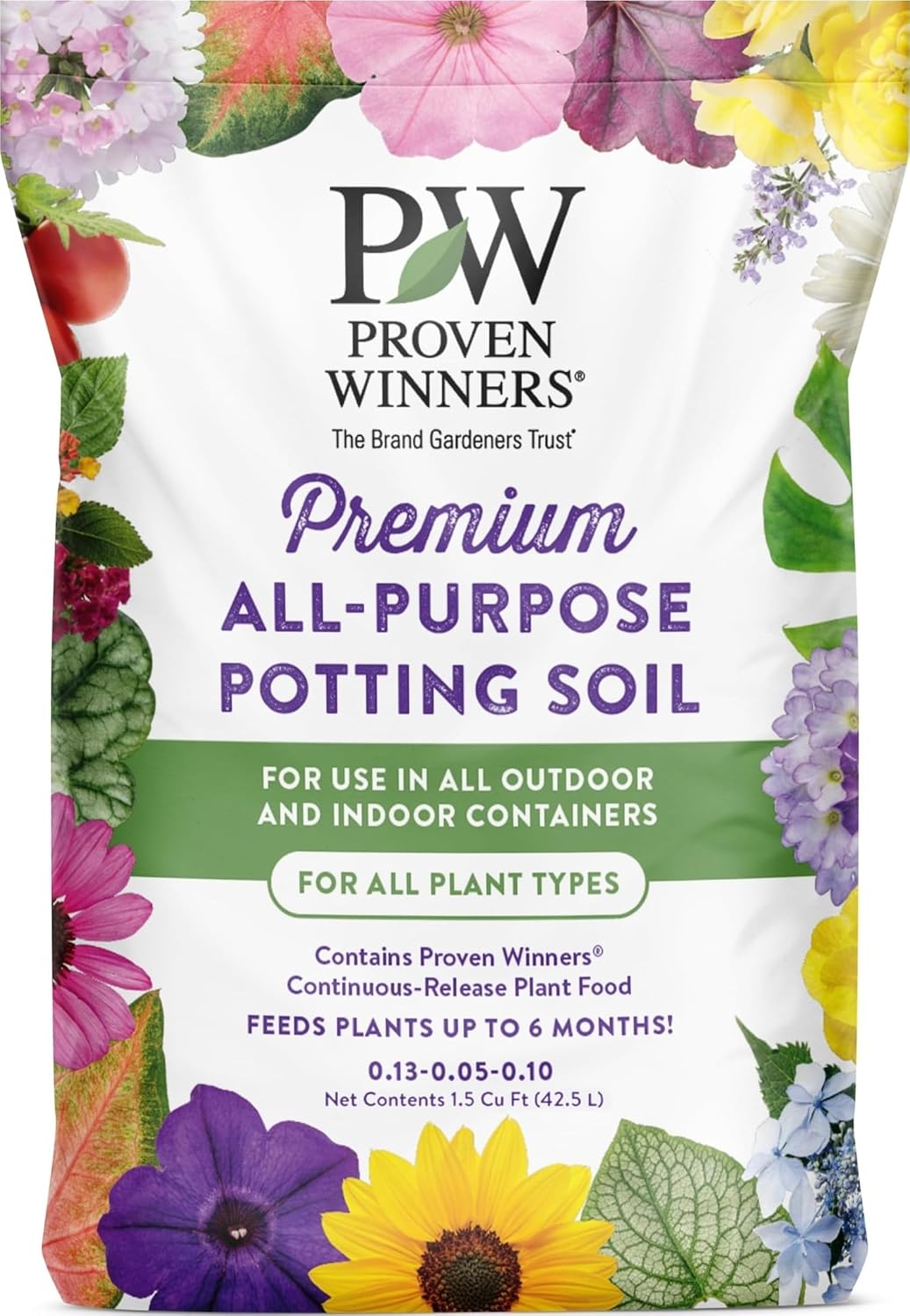
This professional-grade blend leans heavily on Canadian sphagnum peat moss for air regulation and deeper root growth, rounded out with softwood bark for water retention and perlite for drainage.
Pros:
- High peat moss content encourages deep root development
- Dolomite lime helps stabilize soil pH
- Wetting agent improves water absorption
Cons:
- No specific pH number listed for tomato growers to reference
Verdict: A dependable professional-grade base mix, best suited for growers who don’t mind doing a little extra pH testing themselves.
4. FoxFarm Ocean Forest Potting Soil – for All Container Plants
Product Specs: 1.5 cu ft bag | pH 6.3–6.8 | Blend of forest humus, earthworm castings, bat guano, sea-going fish and crab meal | Includes 2 plant tags

It is a nutrient-dense, ready-to-use potting mix that works well straight out of the bag for containers, raised beds, and transplants. The light, aerated texture drains freely while still holding enough moisture to keep roots happy, and the built-in blend of composted forest humus and marine ingredients gives new plants a strong head start without needing to feed right away.
Pros:
- Rich, pre-charged nutrient blend reduces the need for early fertilizing
- Airy, well-draining texture prevents compaction in pots and containers
- Trusted, widely reviewed brand with consistent quality control
Cons:
- Slightly acidic pH may need adjusting for lime-loving or alkaline-preferring plants
- Heavier and richer than seed-starting mixes, so not ideal for germination
Verdict: A premium, nutrient-rich potting soil that’s an easy pick for gardeners who want strong, low-maintenance growth in containers right out of the bag.
5. Wonder Soil Premium Organic Potting Soil Mix
Product Specs: Compressed coco coir · 3 lb bag expands to 12 quarts (up to 7x with water) · Worm castings, mycorrhizae, kelp

This compressed coco coir mix expands up to seven times its size once hydrated, making it one of the most compact and space-saving options on this list. Worm castings and mycorrhizae keep the soil disease-resistant while kelp supplies natural micronutrients.
Pros:
- Extremely compact for storage/shipping before use
- Kelp adds natural nutrients without synthetic additives
- Mycorrhizae protects root systems
- Works for tomatoes, flowers, herbs, and microgreens alike
Cons:
- Requires water prep time before it’s usable
- Expanded volume can be inconsistent depending on how much water is added
Verdict: A smart pick if storage space or shipping weight is a concern — just plan ahead for the expansion step.
6. Miracle-Gro Expand Concentrated Planting Mix
Product Specs: Concentrated coir + fertilizer blend · Expands up to 3x with water · Holds 50%+ more water than standard potting soil · Usable up to 6 months

Miracle-Gro’s concentrated mix combines coir with slow-release fertilizer, expanding up to three times its size once watered. It holds significantly more water than standard potting soil, which helps reduce watering frequency for container tomatoes.
Pros:
- Built-in fertilizer reduces need for separate feeding early on
- High water retention cuts down on watering frequency
- Compact bag size before expansion, easy to store
- Usable for up to 6 months per batch
Cons:
- Must be pre-watered before adding to containers, extra prep step
- Built-in fertilizer means less control over nutrient timing
Verdict: A convenient option for growers who want fewer watering and feeding chores during the season.
7. Plant Magic Compressed Organic Potting-Soil for Garden & Plants
Product Specs: Compressed block · Expands 4x with water · Worm castings, mycorrhizae, processed bacteria, amino acids, coconut coir

This compressed soil expands to four times its size with water and holds up to three times more moisture than standard mixes, thanks to its coconut coir base. Processed bacteria in the formula help suppress disease-causing organisms.
Pros:
- High water-holding capacity, good for consistent moisture
- Beneficial bacteria help reduce disease risk
- Long-lasting; usable for multiple months
- Great for hanging pots and containers, not just ground beds
Cons:
- Requires water expansion step before use
- Amino acid/bacteria blend is less standardized than simpler organic mixes
Verdict: A strong choice if consistent moisture retention is your top priority for container tomatoes.
8. SunGro Horticulture Potting Mix – Natural & Organic, Black Gold – Earthworm Castings, Perlite
Product Specs: 8-quart bag · Pumice, Canadian sphagnum peat moss, composted bark, worm castings, perlite · Lab-tested (Food and Fiber Institute)

Black Gold’s all-purpose mix combines pumice and perlite for aeration with peat moss and worm castings for water retention and growth support. It’s independently lab-tested, giving it a bit more third-party credibility than some competitors.
Pros:
- Independently tested for quality assurance
- Strong aeration from pumice and perlite combo
- Versatile across beds, containers, and hanging baskets
Cons:
- No listed pH range specific to tomatoes
Verdict: A trustworthy pick if third-party quality testing matters to you, though you’ll likely need more than one bag for bigger containers.
9. Michigan Peat Moisture Retaining Potting Soil Mix for Indoor and Outdoor Planting
Product Specs: 20 lb bag · Dark reed sedge peat base · Ready to use

This all-purpose mix is built on a dark blend of reed sedge peat, giving it a fine texture that drains well while still holding onto moisture during dry spells. It’s also commonly used as a soil amendment mixed into existing garden soil.
Pros:
- Reliable moisture retention even in dry weather
- Fine texture allows for easy drainage
- Works well as a garden soil amendment too
- Ready to use straight from the bag
Cons:
- Fewer added nutrients (worm castings, mycorrhizae) compared to other picks on this list
- Peat-heavy formula may need supplemental fertilizer over time
Verdict: A dependable, no-frills option best paired with a separate fertilizer routine for best results.
10. Good Earth Organics, Zen Blend Premium Potting Soil, Organic Soil for Tomatoes
Product Specs: OMRI-certified organic · Perlite, sphagnum peat moss, pumice, compost, alfalfa meal, worm castings · Coco coir for moisture control

This OMRI-certified blend is formulated specifically with tomatoes and leafy greens in mind, combining perlite and pumice for aeration with alfalfa meal and worm castings for fertility. A feeding program is recommended after the first one to two weeks for best results.
Pros:
- OMRI-certified for organic growing
- Formulated specifically for tomatoes and leafy greens
- Alfalfa meal adds an extra fertility boost
- Fine texture keeps the bag lightweight
Cons:
- Requires a follow-up feeding schedule within the first couple weeks
- Certification and specialty formulation may come at a premium price
Verdict: The most tomato-specific, certified-organic option on this list — ideal if certification and targeted formulation matter to you.
What to Consider Before Shopping
Healthy Nutrients
Tomatoes require a lot of nutrients to grow well. The best soil for tomatoes in a containers should have all the necessary nutrients for a plentiful harvest. When buying the best soil for planting, it should be mixed and composed of perlite, coco coir/sphagnum peat moss, and compost.
- Perlite: This is vital in the potting mixture as it will inhibit the soil from compacting with time.it also allows for proper drainage
- Coco coir/Sphagnum peat moss: This nutrient in the soil mixture is vital as it will help in moisture retention for a long time. It also drains water with much ease.
- Compost: This is also important as it adds some natural organic nutrients to the soil, facilitating growth and healthy tomatoes.
For the tomatoes to grow well and produce fruits, the soil should also be rich in potassium, phosphorous, calcium, nitrogen, Sulphur, and magnesium. Each of the following plays a vital role in their growth, for instance:
- The above nutrients are crucial for photosynthesis
- Calcium is necessary for cell structure and preventing the blossom-end rot
- Sulfur is essential for manufacturing proteins required for plant growth and gives the plant the ability to withstand cold temperatures.
- Phosphorous and potassium are necessary for plant flowering.
Smell & Odor
Fresh, good soil should give earthy soil and not an unpleasant scent when soil gives an unpleasant odor that indicates that the soil is holding too much water. The odor is an indication of bacteria infestation because it thrives in wet soil. The soil with smell & odor has the potential risk of being infested by fungi and gnats, which also thrive in moist conditions.
Healthy soil has air pockets that will help the plant’s roots breathe; normal soil is aerobic and has beneficial bacteria. Unhealthy soil is anaerobic and has harmful bacteria, which make it smelly. When buying soil for planting tomatoes in a containers, ensure you determine the ability of the soil to retain water.
Good Drainage & Aeration
For growing tomatoes in containers, The soil should be loose and have the ability to hold water to prevent the tomatoes from drying off. The ideal soil for growing tomatoes is Loam soil; The loam soil has adequate nourishment, proper moisture and effective root growth. Tomatoes have the ability to grow in most types of soils except one that is hard and clayey; this is because this type of soil prevents expansion of the roots of the tomatoes. Loose dirt, on the other hand, is ideal as it facilitates healthy root development.
For tomatoes to grow well, there should be an adequate water supply. Tomato roots, however, do not do well in waterlogged soil. It should be able to stay moist but at the same time not soggy. A soil mix that has perlite, coco peat is very beneficial to tomatoes. Also, to ensure that the soil is well-drained, the plant’s container has drainage holes.
Moisture Retention
Look for a high-quality base of coconut coir or sphagnum peat moss. Coir retains water effectively without shrinking or hardening when dry, cutting down on daily watering needs.
Frequently Asked Question (FAQs) about Best Soil for Tomatoes in Container
No! It is not advisable to use garden soil directly. This is because the soil is heavy and contains pathogens, pests and fungi that can harm the plants. Also, when garden soil is watered in a container, it becomes more compact, thus decreasing the level of oxygen and the capacity of the soil to absorb water. This is not suitable for growth as with soggy soil and lack of oxygen, the plant’s roots will rot, and the plant will wither off.
Potting soil can be used to grow tomatoes; it is plain soil with nutrients from decaying organic matter though it may not be effective as potting mix. Potting soil contains non-soil amendments like perlite and peat moss. Most potting soil is customized a bit to make it suitable for plantation by adding nutrients to it.
The best soil for growing tomatoes in a containers is a potting mix; it is made of organic matter and peat moss, and other nutrients, which will provide better aeration, making the soil lighter, enabling the root to grow much quickly. The potting mix is usually customized for every plant. When buying a potting mix, ensure you check all the specifications as not all have the same nutrients.
Tomatoes thrive best in slightly acidic soil with a pH between 6.0 and 6.8. Keeping soil within this range ensures the roots can efficiently absorb essential nutrients like calcium, nitrogen, and phosphorus without getting locked out.
It is best to avoid using 100% old soil, as it can harbor overwintered fungal spores (like blight), bacteria, and pests. Old soil also loses its structural aeration and nutrients. If you choose to reuse it, blend at least 50% fresh potting mix and rich organic compost into the old soil and remove any old root debris.
Final Thought
When it comes to planting tomatoes, particularly when it’s happening in a container, the kind of soil you use is important and determines its growth. Tomatoes are sensitive plants which can only thrive in good conditions and if well taken care of.
For the best soil for tomatoes in containers, drainage is key when selecting the type of soil to use with tomatoes, thus these plants could stress and die in wet conditions and poor pH levels. The organic matter in the soil should also be high and fertile enough not to burn the tomato plants.