
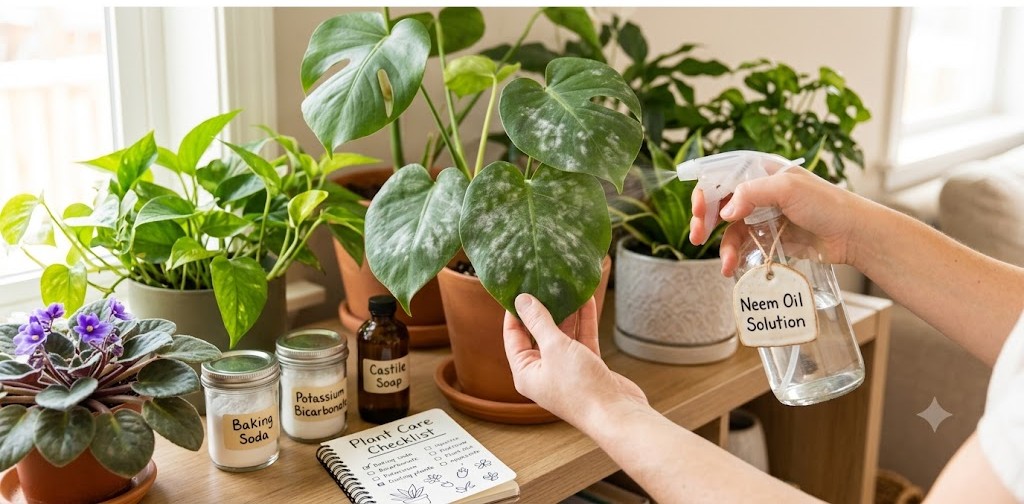
If you’ve noticed a dusty, white coating on your houseplant’s leaves, you’re dealing with powdery mildew — is one of the most persistent fungal infections indoor gardeners face. The good news? It’s rarely fatal, and it’s very treatable once you know what you’re doing. In this guide, you’ll learn exactly how to treat powdery mildew on indoor plants safely, naturally, and permanently; In another way, I’ll walk you through what causes powdery mildew on indoor plants, how to treat it effectively, and how to keep it from coming back. These are the same methods I’ve used on my own houseplant collection after dealing with a stubborn outbreak on a monstera a few summers ago.
Causes of Powdery Mildew on Indoor Plants
Powdery mildew is caused by several related fungal species, and indoor conditions can actually make your plants more vulnerable to it than outdoor ones in some cases. Here’s why it shows up.
Stagnant, Still Air
Stagnant air is one of the biggest triggers I see indoors. When plants are crowded together on a shelf or windowsill with no airflow between them, humidity builds up around the leaves and creates the perfect breeding ground for fungal spores.
High Relative Humidity with Dry Leaf Surfaces
This one surprises people. Powdery mildew thrives in humid air (above 60% relative humidity), particularly when the leaves themselves remain dry. This creates a deceptive trap for indoor plant owners who assume fungal diseases only occur when leaves are dripping wet.
Low Light Conditions
Darker corners slow down a plant’s photosynthesis and metabolic speed, weakening its natural immune system. Shadowy, damp environments also allow fungal structures to multiply without UV light inhibiting their spread.
Overcrowded Pots or Rooms
If you cluster several plants close together, spores can jump from an infected plant to a healthy one through the air or via water splashing during watering. This is one of the fastest ways an outbreak spreads through a whole plant collection.
Bringing in an Already-Infected Plant
Honestly, this is how most home outbreaks start. A new plant from a nursery or big box store can carry mildew spores that aren’t obvious yet. If you don’t quarantine new plants for a week or two, you risk introducing the fungus to your whole collection.
Excessive Nitrogen Fertilize
Feeding your houseplants too much high-nitrogen fertilizer stimulates a flush of soft, tender, leggy growth. Fungal spores easily penetrate these young cell walls compared to sturdy, mature leaves.
Common Plants Prone to Powdery Mildew
- African violets
- Jade plants and other succulents
- Kalanchoe
- Roses grown indoors
- Zinnias grown as houseplants
If you own any of these, it’s worth checking their leaves regularly, especially the undersides.
How to Treat Powdery Mildew on Indoor Plants
Once you’ve spotted the telltale white, powdery patches, it’s time to act. Powdery mildew spreads quickly, so the sooner you treat it, the easier it is to control.
🌱 Powdery Mildew Treatment Process
Step 1: Isolate the Infected Plant
Move the affected plant away from your other houseplants immediately. This is the single most important first step, since fungal spores travel easily through the air in an indoor environment.
Step 2: Prune Away Heavily Affected Leaves
Using clean, sharp scissors or pruning shears, remove any leaves that are heavily coated in mildew. Don’t compost these leaves — bag them and throw them away so spores don’t spread elsewhere in your home or garden.
Pro Tip: Disinfect your pruning shears with rubbing alcohol between cuts. I learned this the hard way after accidentally spreading mildew from one leaf to a healthy one on the same plant.
Step 3: Apply a Treatment Solution
There are several effective options, ranging from homemade remedies to commercial fungicides:
Baking Soda Spray (DIY Option)
Mix 1 teaspoon of baking soda, 1/2 teaspoon of liquid dish soap, and 1 quart of water. Spray it directly onto affected leaves, making sure to coat both the tops and undersides. Baking soda raises the leaf surface pH, which makes it harder for the fungus to survive.
Neem Oil
Neem oil is one of my go-to treatments because it handles fungal issues and pest problems at the same time. Mix according to the product label (usually about 2 teaspoons per quart of water with a few drops of dish soap as an emulsifier) and spray thoroughly, including leaf undersides.
Potassium Bicarbonate Fungicide
This works similarly to baking soda but is often more effective at actually killing existing mildew spores rather than just preventing new ones.
Milk Spray
A diluted milk solution (about 40% milk to 60% water) sprayed on leaves has shown real effectiveness against powdery mildew in several studies, likely due to proteins that create an antiseptic effect when exposed to sunlight.
Commercial Fungicides
For stubborn or widespread infections, a labeled fungicide made for powdery mildew can be the fastest route to recovery. Always follow label instructions for indoor use and dosage.
Step 4: Improve the Growing Environment Immediately
Treatment alone won’t stick if the underlying conditions that caused the outbreak haven’t changed. Increase airflow around the plant, move it to a spot with better light if possible, and hold off on misting until the infection clears.
Step 5: Reapply Treatment as Needed
Most treatments need to be reapplied every 7–10 days until you no longer see new mildew growth. Be patient — it typically takes two to three treatment cycles to fully clear an infection.
What Not to Do
- Don’t use sulfur-based fungicides on plants that have been treated with oil-based products within the past two to three weeks — the combination can burn foliage.
- Avoid overhead watering while treating an active infection, since wet leaves combined with residue from sprays can sometimes worsen fungal issues.
- Don’t ignore a small patch thinking it will go away on its own. Powdery mildew spreads fast indoors where air is often still.
How to Prevent Powdery Mildew on Indoor Plants
Prevention is honestly easier than treatment once you get your routine down. Here’s what’s worked consistently for me.
Improve Air Circulation
Use a small oscillating fan on a low setting near your plant shelves, especially if you keep plants clustered together. Good airflow is one of the most effective long-term prevention strategies available.
Space Plants Out
Give each plant enough room that leaves aren’t touching their neighbors. This limits spore transfer and improves air movement around each plant individually.
Water at the Base, Not the Leaves
Try to water the soil directly rather than spraying water across the foliage. If you enjoy misting for humidity-loving plants, do it early in the day so leaves have time to dry before evening.
Keep Humidity in Check
Aim for humidity levels appropriate to your specific plants rather than uniformly high humidity throughout your home. A hygrometer is a cheap, useful tool for tracking this room by room.
Provide Adequate Light
Move susceptible plants to brighter spots when possible. Stronger light supports more vigorous growth, which naturally resists fungal problems better than weak, leggy growth.
Quarantine New Plants
Keep any new houseplant separate from your collection for 10–14 days after bringing it home. This gives you time to spot early signs of pests or disease before they spread.
Clean Your Tools and Pots Regularly
Fungal spores can survive on gardening tools, pots, and even trays. Wipe down shears, watering cans, and saucers periodically, especially after dealing with an infected plant.
Apply Preventive Treatments During High-Risk Seasons
If certain seasons (like late summer, when indoor humidity often spikes) have triggered outbreaks for you before, consider a light preventive neem oil or baking soda spray every couple of weeks during that window.
Choose Resistant Varieties When Possible
If you’re a repeat sufferer with certain plant types, like African violets or begonias, look for cultivars labeled as mildew-resistant when purchasing new plants.
Frequently Asked Questions (FAQs)
No, powdery mildew itself isn’t toxic to humans or pets. However, some people with mold sensitivities or asthma may experience mild respiratory irritation from airborne spores, so it’s still worth treating and removing promptly.
In most cases, yes. Even plants that look badly affected can usually recover once you prune the worst leaves, treat the rest, and fix the underlying growing conditions. Full recovery typically takes several weeks.
It’s unlikely. Indoor environments tend to have stable, mildew-friendly conditions year-round, so without intervention, the infection usually continues to spread rather than clear up naturally.
With consistent treatment, most infections clear up within two to three weeks. Severe or repeated outbreaks may take longer, especially if the root cause (like poor airflow) isn’t addressed.
Neem oil is generally safe for most common houseplants, but always test it on a small leaf area first and avoid applying it in direct, intense sunlight, which can cause leaf burn on sensitive species.
Yes, quite easily. Spores travel through the air and can also spread via water splashes or contaminated tools, which is why isolating an infected plant right away is so important.
Final Verdict
Powdery mildew looks alarming, but it’s one of the more manageable plant diseases you’ll encounter as an indoor gardener. The keys are catching it early, isolating the affected plant, treating consistently for a couple of weeks, and then adjusting your plant care routine so the conditions that caused it don’t return. With a little consistency, your houseplants can bounce back completely and stay mildew-free long term.