
There is nothing quite like digging into crisp, loose soil in late summer and pulling up a heavy cluster of homegrown potatoes. Whether you love buttery Yukon Golds, classic baking Russets, or vibrant fingerlings, growing potatoes is one of the most rewarding projects a home gardener can undertake. However, Proper planting care is mandatory for your potatoes to grow healthy. Growing potatoes that are big, healthy, and abundant starts with the right fertilizer. In planting care, choosing the best fertilizer for potatoes is one of important tasks among many of it.
Potatoes are remarkably heavy feeders, and giving them the proper balance of nutrients—especially potassium and phosphorus—can mean the difference between a handful of small tubers and a basket full of great ones. In this guide, we’ll walk through our top fertilizer picks for potatoes, what to look for before you buy, and how to apply it for the best results.
Quick Answer: The Top Picks for Potato Fertilizers
If you are short on time and want to know which inputs will give you the most reliable, heavy yield this season, here is a quick summary:
- Best Overall Organic: Espoma Organic Garden-Tone (3-4-4). A slow-release, microbe-rich granular option that prevents nutrient burn while building long-term soil structure.
- Best for Fast Growth & Big Yields: Miracle-Gro Water-Soluble Plant Food (18-18-21). A synthetic, high-potassium formula that delivers immediate nutrition directly to the roots and foliage during critical bulking windows.
- Best at Planting Time: Down to Earth Bone Meal (3-15-0). An exceptional source of organic phosphorus and calcium that stimulates early root development and sets up heavy tuber initiation.
Scheduling Timeline for Potato Fertilizers
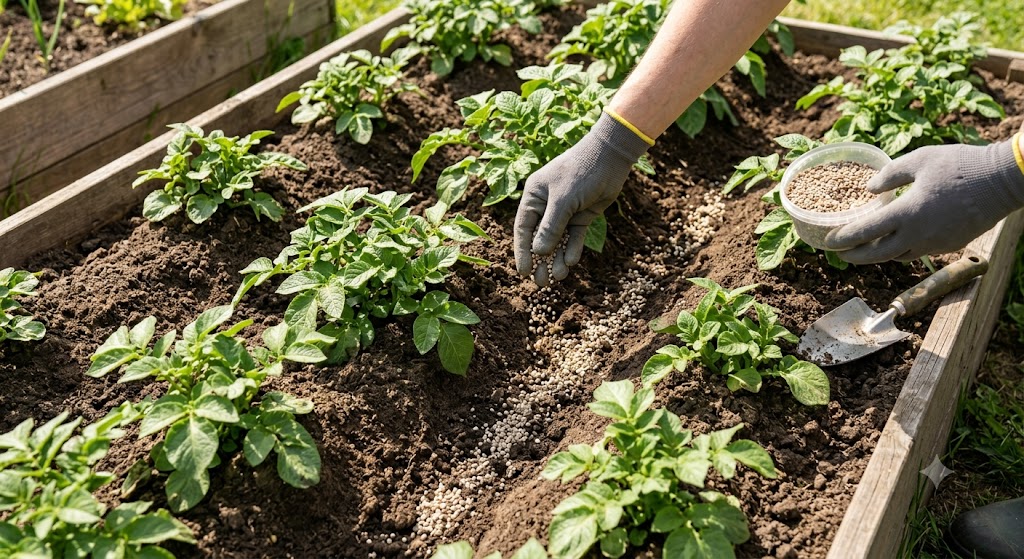
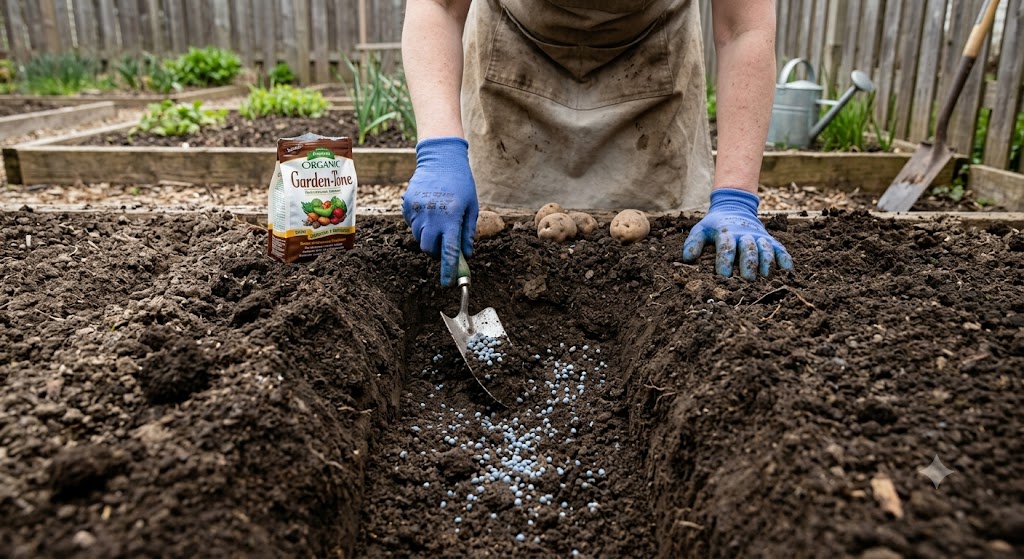
- At Planting: Incorporate a slow-release, phosphorus-rich input like bone meal into the bottom of your trench or container to kickstart deep rooting.
- At First Hilling (Plants 6–8 inches tall): Apply a balanced organic fertilizer like Espoma Garden-Tone to support steady canopy development.
- At Tuber Initiation (When flowers appear): Switch over to a high-potassium input like Miracle-Gro Tomato Food or a light application of Muriate of Potash to fuel rapid tuber expansion.
- Late Season (Vines begin to yellow): Stop all fertilization and taper off watering entirely. This signals to the plant that its life cycle is winding down, allowing the potato skins to thicken and cure for long-term winter storage.
🔍 Compare Before Buying Best Fertilizer for Potatoes
| Product | NPK Ratio | Type | Best For |
|---|---|---|---|
| Miracle-Gro Shake ‘N Feed, Vegetable Plant Food | 10-5-15 | Granular, slow-release (feeds up to 3 months) | Fruiting vegetables in-ground or in containers |
| Osmocote Smart-Release Plant Food, Vegetable | 14-14-14 | Granular, slow-release (feeds up to 4 months) | Balanced feeding for vegetables, perennials & flowers |
| 10-10-10 Plant Fertilizer Slow Release | 10-10-10 | Granular, slow-release | All-purpose garden use (vegetables, shrubs, trees, roses) |
| Burpee Organic Vegetable Granular Plant Food | 3-6-4 | Organic granular, OMRI listed | Organic gardeners growing vegetables |
| Organic Plant Magic – Soluble Plant Food | Not a standard NPK (micronutrient/biology-based formula) | Water-soluble concentrate | All-purpose feeding across flowers, vegetables, herbs & houseplants |
Pro Tips for Maximize Potato Yields
- Potatoes prefer slightly acidic soil with a pH between 5.0 and 6.0, which also helps prevent a common potato disease called “scab.”
- Look for fertilizers where the Phosphorus and Potassium are higher than Nitrogen, such as a 5-10-10.
- Never apply fresh animal manure directly to your potato beds right before planting.
- Water deeply after applying granular fertilizers
- Don’t over-fertilize container potatoes
Deep Dive Into 8 Best Fertilizer for Potatoes Reviews
1. Miracle-Gro Shake ‘N Feed Fruit & Vegetable Plant Food
Product Specs
- NPK Ratio: 10-5-15
- Weight: 4.5 lb.
- Coverage: Up to 128 sq. ft.
- Feeds for: Up to 3 months
- Use: In-ground or containers, outdoor only

A slow-release granular fertilizer built for tomatoes, fruits, and vegetables — in-ground or in containers. It feeds continuously for up to 3 months, so there’s no need to reapply every few weeks. Added calcium supports stronger cell walls, helping produce better-quality, longer-lasting fruit while reducing the risk of blossom end rot.
Pros
- Feeds up to 3 months
- Calcium helps prevent blossom end rot
- Works in-ground or in pots
Cons
- Granular, not a quick liquid feed
- Outdoor use only
2. Espoma Organic Garden-Tone Organic Fertilizer
Product Specs
- NPK Ratio: 3-4-4
- Weight: 4 lb.
- Type: Organic granular
- Feeds for: Slow-release, long-lasting feeding

Espoma Organic Garden-Tone is a premium, all-natural granular fertilizer specifically formulated for cool and warm-season vegetables, herbs, and root crops like potatoes. Enhanced with Bio-tone microbes, it steadily nourishes plants while improving overall soil structure.
Pros
- 100% organic ingredients;
- Won’t burn plants;
- Enriched with beneficial soil microbes.
Cons
- Distinct organic aroma upon application;
- Slower nutrient release compared to synthetics.
Why Its Best
It is the best organic choice for gardeners seeking to enrich their soil long-term. The balanced NPK ratio provides a safe, steady flow of phosphorus and potassium directly to growing tubers without triggering excessive, weak top growth.
3. Down To Earth Organic Bone Meal
Product Specs
- NPK Ratio: 3-15-0
- Weight: 5 lb.
- Type: Organic granular
- Feeds for: Slower, steady root development
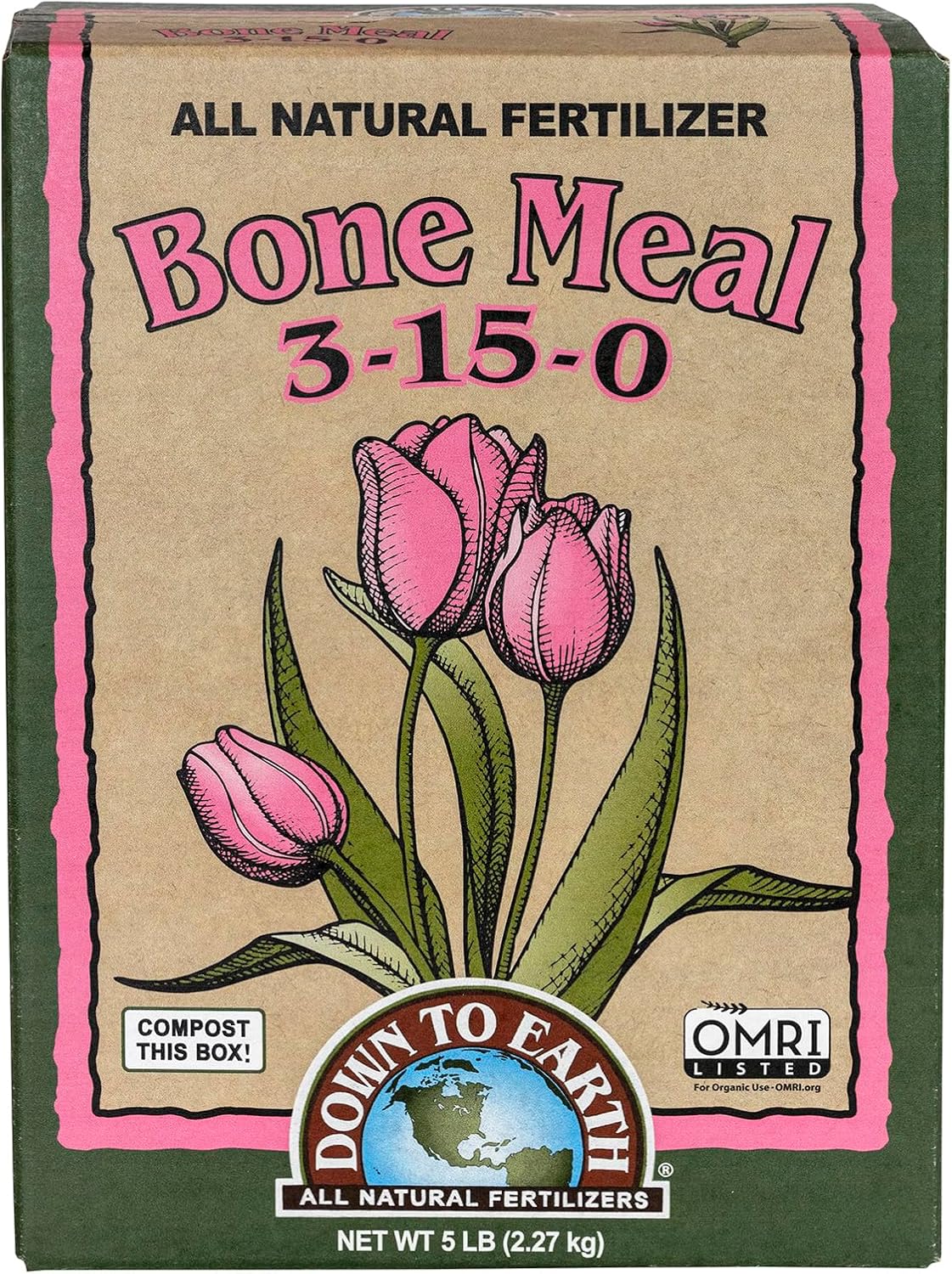
This is a premium, all-natural fertilizer that delivers a heavy dose of phosphorus along with trace amounts of nitrogen and calcium. It is specifically designed to stimulate strong root system advancement and vibrant blooms in bulbs, flowers, and deep-root vegetables like potatoes.
Pros
- Exceptionally high organic phosphorus content;
- Packed in an eco-friendly box;
- Significantly enhances underground tuber development.
Cons
- Slower nutrient release profile;
- Can attract curious pets or wildlife due to the natural scent.
Why Its Best
It is the best pure phosphorus amendment for gardeners needing to fix a soil deficiency or maximize underground growth. By delivering a concentrated amount of phosphorus without excess nitrogen, it encourages potatoes to focus entirely on heavy tuber production rather than weak, sprawling top foliage.
4. Miracle-Gro Water Soluble Plant Food
Product Specs
- NPK Ratio: 18-18-21
- Weight: 1.5 lb.
- Type: Water-soluble crystals
- Feeds for: Instant, quick-release feeding (every 1–2 weeks)

It is a fast-acting synthetic fertilizer specially formulated for nightshades, packed with essential micronutrients like magnesium and zinc. It mixes easily with water to deliver immediate nutrition to both roots and foliage, making it a great option for a quick mid-season boost.
Pros
- Rapid nutrient absorption;
- Dual-action root and foliar feeding;
- Includes key micronutrients to prevent deficiencies.
Cons
- Higher risk of chemical burn if over-applied;
- Requires more frequent applications than granular options.
Why Its Best
It is the best quick-feed synthetic choice for rapid intervention. If your potatoes are showing signs of stress or slow growth mid-season, this high-potassium formula acts immediately to boost vine strength and size up developing tubers faster than slow-release organic alternatives.
5. Osmocote Smart-Release Plant Food, Flower & Vegetable
- NPK Ratio: 14-14-14
- Weight: 2 lb.
- Type: Granular, resin-coated prills
- Feeds for: Up to 4 months

Osmocote Smart-Release Plant Food features unique resin-coated prills that release nutrients slowly based on soil temperature rather than moisture. Its perfectly balanced formula provides a steady, uniform supply of essential macronutrients to promote consistent top-growth and vigorous root systems in vegetables, perennials, and flowers alike.
Pros
- Feeds continuously for up to 4 months;
- Balanced nutrient ratio minimizes the guesswork;
- Reduces the risk of overfeeding or burning.
Cons
- Synthetic formula does not improve long-term organic soil biology;
- Performance drops in extremely cold soils.
Why Its Best
It is the best low-maintenance balanced option for busy gardeners. The equal distribution of nitrogen, phosphorus, and potassium ensures your potato crops receive a reliable, predictable baseline of nutrition throughout their entire growing cycle without requiring constant re-applications.
6. Burpee Organic Tomato & Vegetable Granular Plant Food
- NPK Ratio: 3-6-4
- Weight: 4 lb.
- Type: Organic granular (OMRI listed)
- Feeds for: Up to 3 months

It is a premium, OMRI-listed organic fertilizer formulated to feed standard backyard vegetables, specifically calibrated for heavier fruit and root development. It contains a blend of beneficial microbes that break down organic material over time, delivering sustained nutrition to established crops.
Pros
- OMRI listed for organic gardening;
- Higher phosphorus ratio promotes healthy blooming and rooting;
- Feeds consistently for up to 3 months.
Cons
- Slower to break down in dry soils;
- Has a strong organic odor right after watering.
Why Its Best
It is the best OMRI-certified option for overall root and tuber advancement. The higher middle number (phosphorus) ensures that your potatoes receive an immediate underground energy boost right at planting or during hilling, helping maximize overall yield size organically
7. Organic Plant Magic Soluble Plant Food
- NPK Ratio: Micronutrient and biology-based formula (not a standard NPK)
- Weight: 5 lb. bucket
- Type: Water-soluble concentrate
- Feeds for: Instant, quick-release biological feeding
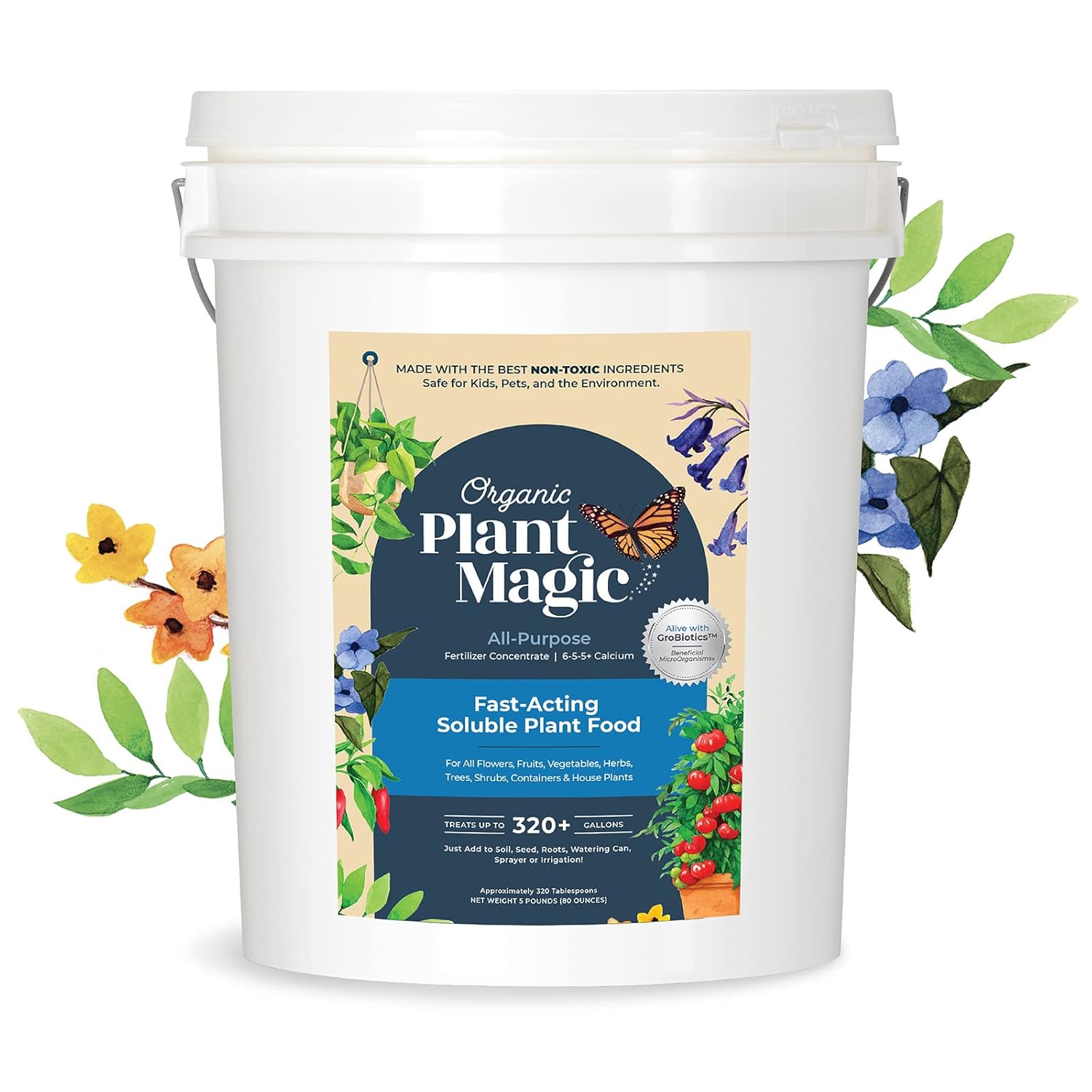
Organic Plant Magic Soluble Plant Food is a highly concentrated, water-soluble organic fertilizer designed for quick absorption. Instead of relying on a standard chemical NPK balance, this truly organic formula focuses heavily on trace minerals, humic acids, and a rich blend of beneficial microorganisms to instantly boost plant vitality and soil health.
Pros
- Rapidly absorbed by roots and leaves;
- 100% organic and completely safe for kids and pets;
- Highly versatile across all plant types.
Cons
- Specific macronutrient guarantee for target crops;
- Requires regular re-application compared to slow-release granules.
Why Its Best
It is the best all-purpose organic liquid choice. If you want a chemical-free, fast-acting solution that provides immediate nutritional support across your entire garden—from house plants to heavy-feeding vegetables—this concentrate delivers immediate results without risking synthetic burn or long-term soil damage
8. Triple 10 All Purpose Liquid Fertilizer
- NPK Ratio: 10-10-10
- Weight / Size: 32 oz.
- Type: Liquid concentrate with Amino Acids (5.5%) & Seaweed Extract
- Feeds for: Fast-acting, immediate root and foliar intake

Triple 10 All Purpose Liquid Fertilizer is a highly concentrated, balanced liquid food designed for rapid plant uptake. Combining equal parts nitrogen, phosphorus, and potassium with organic enhancers like seaweed extract and amino acids, it boosts overall plant vigor, stress resistance, and root growth across all vegetable types.
Pros
- Balanced nutrient profile;
- Highly bioavailable via root drench or foliar spray;
- Contains amino acids to combat environmental stress.
Cons
- Requires mixing with water and more frequent applications than granular types;
- Potential for nutrient burn if over-concentrated.
Why Its Best
It is the best balanced liquid booster for steady growth. The inclusion of seaweed extract and amino acids gives potatoes an extra layer of stress tolerance during hot summer spells, ensuring uniform tuber growth without the delayed absorption of dry granules.
What to Consider Before Buying Best Fertilizer for Potatoes
Choosing the right fertilizer for potatoes requires looking closely at how specific nutrients affect underground tuber development versus above-ground foliage. To maximize your harvest, keep these critical factors in mind before purchasing:
1. The NPK Ratio (Nutrient Balance)
Potatoes are extremely heavy feeders, they require a distinct balance of macronutrients (Nitrogen, Phosphorus, and Potassium) to yield healthy tubers:
- Nitrogen (N): Promotes leafy green vine growth. While necessary early in the season, too much nitrogen causes the plant to focus entirely on lush foliage at the expense of underground growth, resulting in tiny potatoes.
- Phosphorus (P): Essential for early root development and tuber initiation (setting the total number of potatoes you will harvest). Look for a higher middle number to apply at planting time.
- Potassium (K): Crucial for tuber bulking (sizing up the potatoes) and starch synthesis. High potassium levels directly increase crop yield, structural quality, and winter shelf life.
Pro Tip: Look for fertilizers where the Phosphorus and Potassium numbers are higher than the Nitrogen number (such as a 5-10-10 or 3-6-4 ratio) to prevent excessive top growth.
2. Fertilizer Type: Organic vs. Synthetic
Decide whether your priority is building long-term soil health or delivering instant nutrition to the plants:
- Organic Fertilizers: Derived from natural sources (like bone meal, kelp, or poultry manure). They release nutrients slowly as soil microbes break them down, improving soil structure over time and virtually eliminating the risk of chemical root burn.
- Synthetic Fertilizers: Chemically manufactured to deliver immediate, highly concentrated nutrients. They are excellent for fast intervention if plants show mid-season deficiencies, but require careful measuring to avoid burning the crop.
3. Application Form: Granular vs. Water-Soluble
The physical form of the fertilizer dictates how quickly it acts and how often you will need to apply it:
- Granular (Slow-Release): Mixed into the soil at planting or scratched into the surface as a side-dressing during hilling. They dissolve slowly over months, providing a steady baseline of food.
- Water-Soluble / Liquid: Mixed with water and applied as a root drench or sprayed directly onto leaves (foliar feeding). They are absorbed almost instantly, making them ideal for quick nutrient delivery during the critical tuber-bulking phase when flowers appear.
4. Added Micronutrients & Calcium
Beyond standard NPK, potatoes require secondary nutrients to prevent physiological defects:
- Calcium: Crucial for building strong cell walls in growing tubers. A calcium deficiency can lead to internal brown spots or “hollow heart” disease.
- Magnesium and Zinc: Support chlorophyll production and enhance the overall health and vigor of the vines.
5. Soil pH Compatibility
Potatoes thrive best in slightly acidic soil with a pH between 5.0 and 6.0. Ensure your chosen fertilizer does not drastically spike soil alkalinity, as alkaline conditions dramatically increase the risk of potato scab—a common fungal disease that leaves rough, unsightly corky patches on the skin of the tubers.
Frequently Asked Questions
Yes, high-quality tomato fertilizers are fantastic for potatoes. Tomatoes and potatoes belong to the exact same botanical family (Solanaceae) and share almost identical nutritional demands. Both crops require moderate nitrogen early on, followed by massive amounts of potassium and calcium to develop heavy, split-free fruits and tubers.
If you are using organic granular fertilizers, applying them once at planting time and side-dressing once more during the first hilling phase is usually sufficient for the entire season. If you prefer water-soluble synthetic fertilizers, feed your plants every 10 to 14 days from early summer until the vines begin to decline.
Yes, but with caution. Well-rotted or pelleted chicken manure is an excellent organic input because it is rich in trace minerals and contains up to 7% calcium, which potatoes love. However, you should never use raw, fresh chicken manure during the growing season. Fresh manure contains excessive, volatile nitrogen that can burn roots and increase the risk of disease transmission like Salmonella.
This is a classic symptom of nitrogen toxicity. When a potato patch receives too much nitrogen (often from lawn fertilizer run-off or uncomposted manures), the plant stays stuck in its vegetative phase. It pours all its resources into building tall, lush green vines while completely neglecting underground tuber production.
This condition is called “hollow heart,” and it is caused by rapid, uneven tuber growth, usually driven by sudden surges of moisture and a localized lack of calcium in the soil. Ensuring your fertilizer has adequate calcium and maintaining steady, consistent watering will completely eliminate this issue.
Epsom salt is magnesium sulfate. If your soil is genuinely deficient in magnesium, a light foliar spray of Epsom salt (1 tablespoon per gallon of water) can boost chlorophyll production and keep your leaves vibrant. However, if your soil already has plenty of magnesium, adding more will not increase your potato yields.
Final Verdict
Growing a heavy, high-quality harvest of potatoes comes down to understanding the shifting needs of the plant. For the casual home gardener looking for a simple, completely foolproof organic strategy, Espoma Organic Garden-Tone combined with a handful of Down to Earth Bone Meal at planting time will give your soil the perfect foundation for a delicious harvest.
If your goal is to maximize tuber sizes or give container-bound plants an immediate boost, complementing your routine with a high-potassium liquid feed like Miracle-Gro Water-Soluble Tomato Food during the mid-summer flowering window will maximize your yield. Keep your soil slightly acidic, water evenly, and feed for root and tuber health rather than leaf growth, and you will be rewarded with a spectacular potato harvest.