
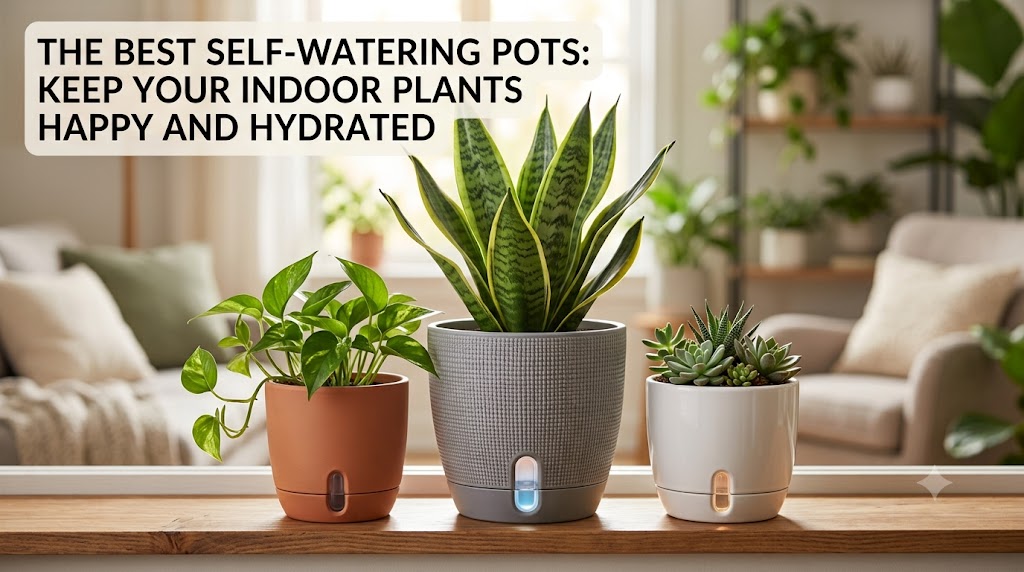
Keeping indoor plants alive shouldn’t feel like a full-time job, yet forgetting a single watering session can quickly lead to drooping leaves and heartbreak. If you love the look of lush greenery but struggle to maintain a consistent watering schedule, you aren’t alone. Fortunately, the best self-watering pots for indoor plants are designed to take the guesswork out of plant care, keeping your favorite flora perfectly hydrated even when you’re away or busy.
At-a-Glance Comparison
| Brand & Model | Best For | Product Specs | Water Level Indicator? |
| Lechuza Classico LS | Premium Luxury | Premium Polypropylene · 12-Week Autonomy | Yes (Visual Float Gauge) |
| Modern Decorative Flower Pots | Overall Budget | Heavy-Duty Plastic · 2 to – 3 Week Autonomy | Yes (Visual Float Gauge) |
| Santino Asti | Sensitive Roots | Breathable Plastic · 4-Week Autonomy | Yes (Clear Window) |
| Window Garden Aquaphoric | Kitchen Herbs | Sleek Plastic · 2 to 3-Week Autonomy | Yes (Visual Float Gauge) |
| T4U 6-Pack | Multi-Pack Variety | Matte Plastic · 1 to 2-Week Autonomy | No (Visual Check) |
| Novelty Full Depth | Deep-Rooted Plants | Impact-Resistant Resin · 2 to 3-Week Autonomy | No (Visual Fill Port) |
| Basics Fluted Ceramic Planters | Modern Aesthetics | Authentic Ceramic · 1 to 2 Week Autonomy | No (Visual Check) |
| Make Good PlantPod Luxe | Space-saving vertical | Resistant Resin · 1 to 2-Week Autonomy | Visual Check/Open Top Lip |
| Modern Decorative Flower Pots for | Modern Aesthetics | Heavy-Duty Plastic· 2 to 3-Week Autonomy | Yes (Visual Float Gauge) |
| Bloem Lucca | Eco-Conscious | BPA-Free Recycled Plastic · 2-Week Autonomy | No (Open Base Lip) |
What is Self-Watering Pot
A self-watering pot is a specialized container designed with a built-in reservoir that allows plants to drink water at their own pace, mimicking how they absorb moisture in nature.
Instead of pouring water directly onto the topsoil from above, you fill a storage tank at the bottom of the pot. Here is how they typically work:
- The Sub-Irrigation System: The pot is divided into two main chambers: an upper chamber for the potting soil and plant roots, and a lower chamber that acts as a water reservoir.
- The Wicking Action: Through capillary action (often facilitated by absorbent wicking ropes, specialized porous cones, or mesh grids), moisture is drawn naturally upward into the soil as it dries out.
- Overwatering Protection: Because the roots pull up only the exact amount of moisture they need, the topsoil stays perfectly aerated. This prevents waterlogging, which is the number one cause of root rot in indoor houseplants. Consistently soggy soil is also a major trigger for fungus gnats, so if you’re already dealing with an infestation, see our guide on how to get rid of houseplant pests alongside switching to a better-draining watering routine.
- Convenience: Depending on the reservoir size, these planters can keep your plants perfectly hydrated for anywhere from 1 to 12 weeks without requiring a refill—making them excellent for busy schedules or when you go on vacation.
How Self-Watering Pots work
A self-watering pot uses a sub-irrigation system divided into two chambers: an upper section for soil and roots, and a lower reservoir for water.
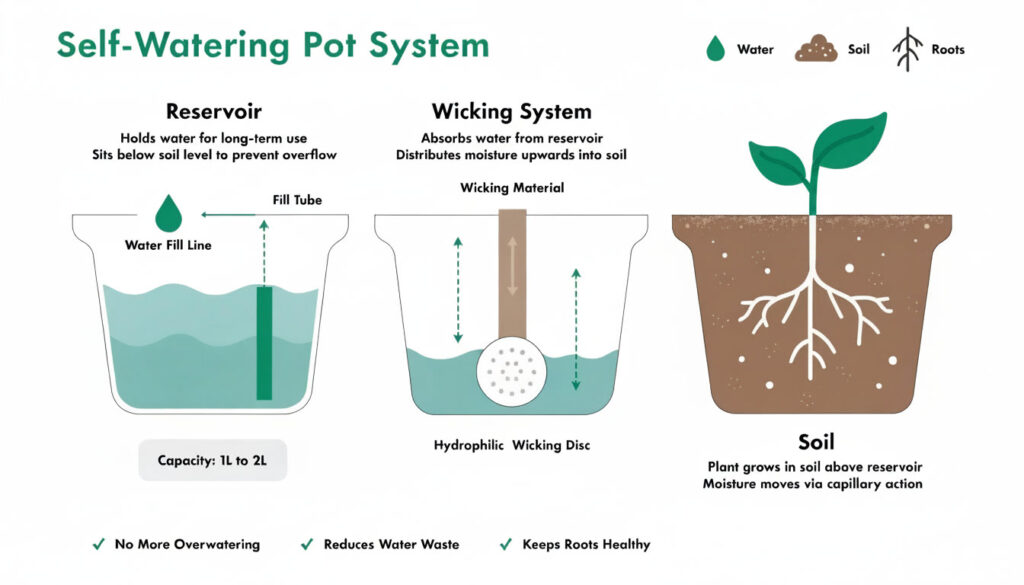
Instead of watering from above, you fill the bottom reservoir. Through capillary action—via wicking ropes, mesh grids, or porous channels—moisture is naturally drawn upward into the soil only as it dries out.
Because the plant drinks at its own pace, the topsoil stays aerated. This prevents waterlogging and root rot while keeping your plants perfectly hydrated for weeks.
Our Top 10 Picks of Self-Watering Pots For Indoor Plants
1. Lechuza Classico LS
Product Specs
- Material: Premium Polypropylene
- Watering Autonomy: Up to 12 weeks
- Indicator Type: Visual Float Gauge
- Best For: Luxury aesthetics and maximum self-watering duration

The Lechuza Classico LS is a premium investment piece that combines a flawless, German-engineered sub-irrigation system with high-end aesthetics. It features an intelligent water level indicator that completely eliminates the guesswork and includes a starting layer of premium LECHUZA-PON substrate to help regulate moisture right out of the box.
Pros
- Highly accurate water gauge
- Shatterproof and UV-resistant material
- Comes with nutrient-rich plant substrate.
Cons
- Premium price tag
- A bit heavy when fully filled with water and soil.
2. Modern Decorative Flower Pots, Self Watering Pots for Indoor Plants
Product Specs
- Material: Heavy-Duty Plastic
- Watering Autonomy: 2 to 3 weeks
- Indicator Type: Visual Float Gauge
- Best For: Both indoor and outdoor setups requiring multiple matching sizes

If you want to create a cohesive look across your home and patio, this multi-size set is an excellent choice. Featuring three distinct diameters (8, 10, and 12 inches), these modern decorative green flower pots are built with an efficient sub-irrigation setup that safely balances hydration for larger, fast-growing indoor or outdoor plants.
Pros
- Versatile multi-size pack handles larger root structures
- Vibrant modern green finish
- Built-in drainage holes prevent waterlogging
Cons
- Plastic construction can feel slightly flexible when packed with dense soil
- Heavy to shift once filled
3. Santino Asti Self-Watering Planter
Product Specs
- Material: Plastic
- Watering Autonomy: Up to 4 weeks
- Indicator Type: Clear View Window
- Best For: Moisture-sensitive indoor flora like African Violets

The Santino Asti uses a clever dual-layer design that ensures your plant’s soil stays consistently moist without ever becoming waterlogged. It’s particularly popular among sensitive plant growers because it maintains steady sub-surface capillary action while letting roots breathe.
Pros
- Provides excellent airflow around the root system
- Wide variety of bright color choices
- Very easy to top up through a dedicated port.
Cons
- The inner drainage liner can be tricky to lift out once the plant grows dense, tangled roots.
4. Window Garden Aquaphoric Planter
Product Specs
- Material: Plastic
- Watering Autonomy: 2 to 3 weeks
- Indicator Type: Visual Float Gauge
- Best For: Foolproof indoor herb gardening

The Window Garden Aquaphoric is a darling of windowsill gardeners. It uses a specialized fiber wick system that pulls exactly the right amount of water up to your plant’s roots, paired with a distinct, easy-to-read water gauge that leaves zero room for error.
Pros
- Includes a starting fiber soil disk
- Highly reliable water level indicator
- Foolproof setup for beginners.
Cons
- Small footprint limits it to small-to-medium houseplants and herbs only.
5. T4U Plastic Self-Watering Pots (6-Pack)
Product Specs
- Material: Plastic
- Watering Autonomy: 1 to 2 weeks
- Indicator Type: Visual Check / Open Base
- Best For: Unifying collections of small houseplants and cuttings

If you have an expanding collection of succulents, small ferns, or pothos cuttings, this multi-size pack is a lifesaver. This set provides a unified, clean matte white aesthetic across various small diameters to make your plant shelves look highly organized.
Pros
- Excellent value per pot
- Mesh drainage holes prevent soil from leaking down into the water supply.
Cons
- Not designed for large root systems.
6. Novelty Manufacturing Full Depth Cylinder
Product Specs
- Material: Impact-Resistant Resin
- Watering Autonomy: 2 to 3 weeks
- Indicator Type: Visual Fill Port
- Best For: Fast-growing indoor trees and deep-rooted plants

Many self-watering pots are shallow, but the Novelty Manufacturing Cylinder offers a full-depth chamber. This allows taproots and fast-stretching root networks plenty of space to spread out safely above the built-in overflow reservoir.
Pros
- Exceptionally deep potting space
- Subtle matte finish fits any room
- Glossy built-in overflow protection.
Cons
- Lacks an external water window
- You have to gauge the remaining water levels directly through the side fill port.
7. Basics Fluted Ceramic Planters for Indoor Plants
Product Specs
- Material: Authentic Ceramic
- Watering Autonomy: 1 to 2 weeks (depending on plant type)
- Indicator Type: Visual Check / Manual Gauge
- Best For: Plant owners looking for a heavy, premium ceramic look across multiple sizes

If you prefer the weight and premium texture of real earthenware over plastic, this Amazon Basics trio is an elegant solution. Featuring a clean, fluted texture in a matte black finish, this set includes 6-inch, 8-inch, and 10-inch nesting sizes that let you unify different plant maturities on your shelves while utilizing a highly reliable bottom-reservoir drainage system.
Pros
- Genuine heavy ceramic construction
- Gorgeous minimalist fluted texture
- Multi-size pack offers great staging variety.
Cons
- Ceramic material lacks a mechanical water float gauge
- Significantly heavier to move around
8. Make Good PlantPod Luxe – Self-Watering Wall Planters
Product Specs
- Material: Lightweight Impact-Resistant Resin
- Watering Autonomy: 1 to 2 weeks
- Indicator Type: Visual Check / Open Top Lip
- Best For: Plant lovers wanting to design a space-saving vertical green wall indoors

If you are short on floor or shelf space, the PlantPod Luxe set allows you to take your indoor jungle vertical. This modular set of 6 lightweight planters is engineered specifically for effortless wall mounting, letting you snap individual pods together to create a customized living wall display that keeps trailing vines and small tropicals perfectly hydrated.
Pros
- Highly customizable modular layout
- Exceptionally lightweight
- Simplifies vertical herb and pothos gardening.
Cons
- Small individual pod capacity restricts it to small or trailing plant varieties only
9. Modern Decorative Flower Pots for Indoor Outdoor Plants
Product Specs
- Material: Heavy-Duty Plastic
- Watering Autonomy: 2 to 3 weeks
- Indicator Type: Visual Float Gauge
- Best For: Plant owners wanting modern, clean aesthetics for medium-to-large houseplants

If you love a bright, clean, minimalist home decor style, this 2-pack of 10-inch pristine white planters is a fantastic pick. Made from durable plastic that handles both indoor and outdoor placements, these modern flower pots feature a deep sub-irrigation reservoir and an easy-to-read float system that ensures larger foliage like peace lilies or snake plants stay perfectly hydrated without risking root rot.
Pros
- Generous 10-inch size is perfect for mature root systems
- Clean, modern decorative white finish
- Works reliably indoors or on a patio.
Cons
- Requires a large volume of potting mix to fill completely.
10. Bloem Lucca Self-Watering Planter
Product Specs
- Material: BPA-Free Recycled Plastic
- Watering Autonomy: 2 weeks
- Indicator Type: Open Base Lip
- Best For: Eco-conscious indoor gardeners looking for long-lasting durability

Made with high-quality, UV-stabilized, BPA-free recycled plastics, the Bloem Lucca is built to stand the test of time. It features an attached basin with a convenient feeding lip that ensures your sub-surface watering and liquid fertilizing are seamless.
Pros
- Proudly made with recyclable materials
- Excellent UV protection prevents fading near sunny windows.
Cons
- The attached saucer can snap off if handled roughly when completely full of heavy soil
What To Look For Before Buying Best Self-Watering Pots for Indoor Plants
- Reservoir Size and Refill Frequency: The water reservoir determines how long a pot can go between refills. Smaller reservoirs are fine for compact plants like herbs, but larger houseplants or busy schedules call for a bigger capacity to avoid frequent top-offs.
- Water Level Indicator: Pots with a visible gauge or indicator stick take the guesswork out of watering. Without one, it’s easy to either overfill the reservoir or forget it entirely, which defeats the purpose of a self-watering system.
- Material and Durability: Ceramic and UV-resistant resin tend to hold up better over time and near sunny windows, while basic plastic is lighter and more affordable but may fade or crack sooner.
- Drainage and Overflow Protection: Even self-watering pots need a way to prevent overflow during heavy watering or rain (for plants near windows). Look for an overflow hole or drainage outlet so excess water doesn’t pool and cause root rot.
- Size Relative to Plant and Root System: A pot that’s too small restricts root growth, while one that’s too large can hold excess moisture longer than the plant needs. Matching pot size to the plant’s mature size and root depth helps the self-watering function actually work as intended.
FAQs
Most self-watering pots work well for plants that prefer consistently moist soil, like herbs, ferns, and leafy greens. Plants that prefer to dry out between waterings, such as succulents or cacti, generally do better in traditional pots with good drainage.
This depends on the plant size, pot capacity, and indoor climate, but most reservoirs need refilling every one to three weeks. A water level indicator makes it easy to check without guessing.
Yes, if the reservoir is overfilled or the wicking system keeps soil too saturated for a plant’s needs. Choosing a pot with proper overflow protection and matching it to the right plant type helps prevent this.
Yes, they’re often recommended for beginners since they reduce the risk of underwatering or forgetting to water altogether. They also help with consistency, which many new plant owners struggle with.
Empty and rinse the reservoir every few months to prevent algae or mineral buildup, especially in humid environments. Pots with removable liners make this process much easier than one-piece designs.
Final Thought
Self-watering pots take a lot of the guesswork out of indoor plant care, especially for anyone juggling a busy schedule or a growing collection of houseplants. Whether you’re outfitting a kitchen windowsill with herbs or looking for a low-maintenance solution for larger floor plants, there’s an option on this list suited to your space and plant type.
The right pick ultimately comes down to matching the pot’s size, material, and watering system to the specific plants you’re growing — a small herb planter won’t serve a large monstera well, just as an oversized reservoir pot might overwater a compact succulent. Take stock of your plant’s needs and your home’s layout, and the right self-watering pot can make indoor gardening noticeably easier to keep up with.