
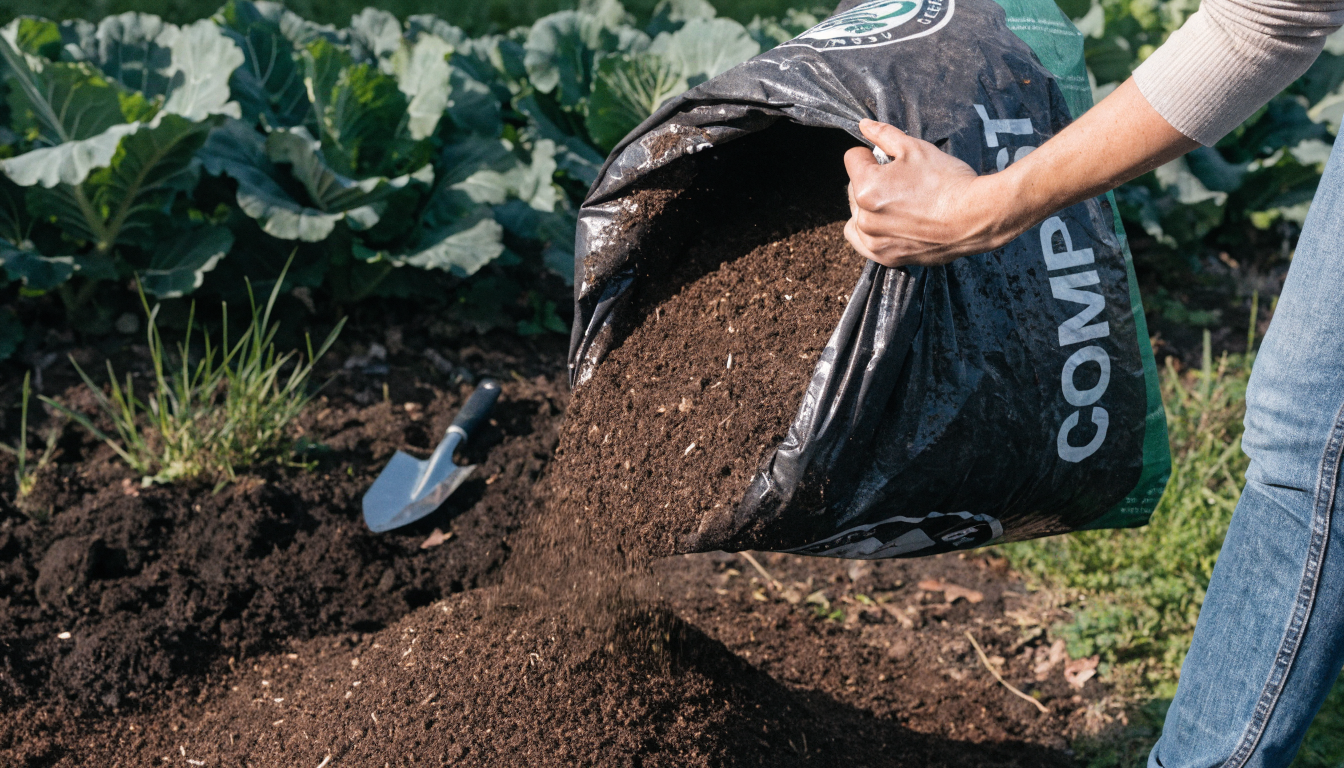
Choosing the best compost for garden beds is one of the simplest ways to boost your harvest naturally. Quality compost enriches soil with essential nutrients, improves moisture retention, and supports the beneficial microbes vegetables need to thrive from seedling to harvest.
With countless bagged compost brands on shelves, finding the right one for your tomatoes, peppers, or leafy greens can feel overwhelming. That’s why we’ve researched and compared the best bagged compost for vegetable garden options available today, evaluating nutrient richness, texture, organic certification, and overall value.
In this guide, you’ll find top-rated picks suited for raised beds, containers, and in-ground gardens — helping you grow healthier, more productive vegetables season after season.
🔍 Compare Before You Buy Best Bagged Compost
| Product | Best For | Product Specs |
|---|---|---|
| Charlie’s Compost 10 lb OMRI Organic | Organic vegetable gardens | 10 lb · OMRI Certified · Chicken Manure & Biochar |
| Fishnure – Humus Fish Compost Fertilizer | both indoor and outdoor plants | 8 lb · Fish Humus Compost · organic |
| Wiggle Earthworm Castings | Seedlings & indoor plants | 15 lb · Organic · Pure Earthworm |
| Michigan Peat Magic Compost | Large garden beds | 40 lb · Natural · Reed Sedge Peat & Compost |
| Espoma Organic Land and Sea Gourmet Compost | Vegetables, flowers, trees & shrubs | 1 cu ft · Organic · Lobster & Crab Meal Blend |
| Black Kow Composted Cow Manure | Large garden beds & soil conditioning | 35 lb · Natural Organic · Composted Cow Manure |
| Ribbon Organics Compost | Food crops & raised bed gardens | 32-35 lb · OMRI Certified · Microbe-Active Compost |
| Organic Compost Plant Based Potting Soil | Indoor plants & container gardening | ~25 lb · Organic · 100% Plant-Based Compost |
| R&M Organics Premium Organic Compost | Vegetables, flowers, plants & lawns | 10 lb · Organic · Low Odor Manure-Based Compost |
1. Charlie’s Compost 10 lb OMRI Organic Compost

Charlie’s Compost is a premium OMRI-certified organic soil amendment combining chicken manure and biochar for exceptional nutrient density and long-term soil improvement. Perfect for gardeners who demand certified organic quality for their vegetable beds, containers, and raised garden plots.
Why It Works for You
| Feature | Benefit |
|---|---|
| OMRI Organic Certified | Grow truly organic vegetables — zero synthetic chemicals |
| Chicken manure blend | Naturally nitrogen-rich — promotes vigorous plant growth |
| Biochar enriched | Improves soil structure long-term — retains nutrients and moisture |
✅ The Good Stuff
- OMRI certified organic
- Nitrogen-rich chicken manure
- Biochar boosts soil structure
- Versatile for all garden types
❌ Weak Points
- Small 10 lb size
- Strong manure odor
- Pricier than average
2. Fishnure – Humus Fish Compost Fertilizer for Indoor Plants, Outdoor Houseplant

Fishnure Humus Fish Compost is a uniquely powerful, odor-free organic fertilizer that harnesses the natural nutrient richness of fish to deliver exceptional plant nutrition for both indoor and outdoor gardens. Unlike traditional fish-based fertilizers that come with an unpleasant smell, Fishnure’s humus composting process eliminates odor entirely — making it a genuinely pleasant experience to use indoors and outdoors alike.
Why It Works for You
| Feature | Benefit |
|---|---|
| Fish humus compost base | Exceptional natural nutrition — richer nutrient profile than standard composts |
| Odor-free formula | Use comfortably indoors — no unpleasant fish smell in your home |
| Slow-release nutrients | Feeds plants consistently for months — no nutrient spikes or sudden crashes |
| Indoor & outdoor versatility | One product for every plant — houseplants, containers, and garden beds |
✅ The Good Stuff
- Odor-free compost
- Slow-release formula
- Builds long-term soil health naturally
- Versatile for houseplants
- Makes a thoughtful, practical gardener gift
❌ Weak Points
- Premium price
- Smaller 8 lb size for large outdoor gardens
- Results may take time compared to synthetic fertilizers
3. Wiggle Worm Soil Builder Earthworm Castings

Wiggle Worm Soil Builder is pure earthworm castings — nature’s most powerful and gentle soil amendment. Packed with beneficial microbes, natural growth hormones, and slow-release nutrients, this compost is perfect for seedlings, indoor plants, and any vegetable garden needing a gentle but highly effective nutritional boost.
Why It Works for You
| Feature | Benefit |
|---|---|
| Pure earthworm castings | Gentlest compost available — impossible to over-apply or burn plants |
| Beneficial microbes | Boosts soil biological activity — healthier root environment naturally |
| Slow-release nutrients | Feeds plants consistently over time — no nutrient spikes or crashes |
| Odor-free formula | Pleasant to use indoors and outdoors — no unpleasant smells |
✅ The Good Stuff
- Burn-free, impossible to over-apply
- Odor-free for indoor and outdoor use
- Microbe-rich for long-term soil health
- Ideal for seedlings and sensitive plants
❌ Weak Points
- Premium price
- Smaller bag sizes for the cost
- Less nitrogen than manure-based options
4. Michigan Peat 5240 Garden Magic Compost

Michigan Peat Garden Magic Compost is a reliable, affordable all-purpose compost blend ideal for large vegetable garden beds and landscape applications. Its rich peat and reed-sedge composition improves soil aeration, drainage, and moisture retention across a wide range of soil types.
Why It Works for You
| Feature | Benefit |
|---|---|
| Peat & reed-sedge blend | Improves drainage and aeration naturally — better root growth |
| Large bag availability | Covers big garden areas affordably — excellent value per cubic foot |
| Improves all soil types | Works in clay, sandy, or loamy soil — universal soil improvement |
| Moisture retention | Keeps soil consistently moist — less frequent watering needed |
✅ The Good Stuff
- Excellent value for large garden areas
- Improves drainage in all soil types
- Widely available and consistent quality
- Budget-friendly for big gardens
❌ Weak Points
- Not OMRI certified organic
- Lower nutrient density than premium options
- Peat content raises sustainability concerns
5. Espoma Organic Land and Sea Gourmet Compost

Espoma Organic Land and Sea Gourmet Compost combines the best of land and ocean nutrition into one premium planting mix. Enriched with lobster and crab meal, it delivers a uniquely mineral-rich nutritional profile for vegetables, flowers, trees, and shrubs — all in a generous 1 cubic foot bag.
Why It Works for You
| Feature | Benefit |
|---|---|
| Lobster & crab meal enriched | Unique ocean mineral boost — trace nutrients standard composts can’t deliver |
| Land and sea dual-source blend | Balanced, complete plant nutrition — feeds from multiple natural sources |
| Gourmet planting mix formula | Premium soil enrichment — noticeably richer results every application |
| Versatile for all plant types | One bag for your entire garden — vegetables, flowers, trees, and shrubs |
✅ The Good Stuff
- Unique lobster and crab mineral blend
- Versatile for all plant types
- Trusted Espoma quality
- Generous 1 cubic foot coverage
❌ Weak Points
- Premium price point
- Mild ocean odor initially
- Excessive for small containers
6. Black Kow Composted Cow Manure 35 lb Bag

Black Kow Composted Cow Manure is a classic, widely trusted organic soil amendment delivering rich slow-release nitrogen and essential organic matter. Fully composted and odor-controlled, this dependable 35 lb bag improves soil structure, drainage, and fertility across every garden type.
Why It Works for You
| Feature | Benefit |
|---|---|
| Fully composted cow manure | Rich slow-release nitrogen — steady feeding without burning plants |
| Odor-controlled formula | Pleasant to use in any garden — no overwhelming manure smell |
| Improves soil structure | Better drainage and aeration — roots grow deeper and stronger |
| Universal soil amendment | Works in any soil type — clay, sandy, loamy, or depleted beds |
✅ The Good Stuff
- Proven classic formula, trusted for decades
- Odor-controlled for comfortable garden use
- Rich nitrogen for consistent plant feeding
- Excellent value for large garden areas
❌ Weak Points
- Not OMRI certified organic
- Heavy 35 lb bag to handle
- Lower nutrient density than premium options
7. Ribbon Organics OMRI Certified Organic Compost 7.9 Gallons

Ribbon Organics OMRI Certified Organic Compost is a premium certified organic soil amendment built for gardeners who demand the highest purity standards for their food crops. This rich, dark, microbe-active compost improves soil fertility, structure, and biological activity in one simple application.
Why It Works for You
| Feature | Benefit |
|---|---|
| OMRI certified organic | Grow with complete confidence — meets highest organic production standards |
| Rich, dark compost texture | Immediate soil structure improvement — better drainage and root growth |
| Beneficial microbial activity | Builds long-term soil biology — healthier growing environment naturally |
| Low odor formula | Comfortable indoors and outdoors — no unpleasant composting smells |
✅ The Good Stuff
- OMRI certified for highest organic standards
- Rich dark texture for immediate soil improvement
- Beneficial microbes for long-term soil health
- Generous bag size for raised beds
❌ Weak Points
- Premium price for certified quality
- Limited availability in local stores
- Heavy bag requires careful handling
8. Organic Compost Plant Based Potting Soil

This plant-based organic compost delivers complete, all-natural nutrition for both indoor and outdoor growing environments. Designed to actively boost plant growth and support long-term soil health, this versatile 25 lb bag is a simple, effective solution for home gardeners, container growers, and indoor plant enthusiasts alike.
Why It Works for You
| Feature | Benefit |
|---|---|
| Plant-based organic formula | 100% natural nutrition — no synthetic chemicals or animal by-products |
| Complete plant food blend | Everything your plants need in one bag — simplified feeding routine |
| Boosts plant growth actively | Visibly stronger, healthier plants — faster results from first application |
| Indoor and outdoor versatility | One product for every situation — houseplants to outdoor garden beds |
✅ The Good Stuff
- 100% plant-based, no animal by-products
- Complete nutrition in one bag
- Safe for family, pets, and edible crops
- Versatile for indoor and outdoor use
❌ Weak Points
- Less established brand
- Results vary by existing soil quality
- May need supplemental fertilizer for heavy feeders
9. R&M Organics Premium Organic Compost

R&M Organics Premium Organic Compost is a low-odor, manure-based soil amendment crafted for gardeners who want reliable organic nutrition indoors and outdoors. With excellent moisture retention and an all-purpose formula, this compact 10 lb bag feeds vegetables, flowers, plants, and lawns with minimal fuss and maximum convenience.
Why It Works for You
| Feature | Benefit |
|---|---|
| Low odor manure-based formula | Use comfortably indoors and outdoors — no overwhelming manure smell |
| Moisture retention properties | Keeps soil consistently hydrated — less frequent watering needed |
| All-purpose soil amendment | Feeds vegetables, flowers, and lawns — one product, total versatility |
✅ The Good Stuff
- Low odor for indoor and outdoor comfort
- Excellent moisture retention
- Versatile for all garden types
- Compact, easy-to-handle size
❌ Weak Points
- Small 10 lb size for large gardens
- Less established brand
- May need multiple bags for bigger beds
Need of Compost To Improve Soil Health
Compost is best used as much for soil quality improvement in order to help the growth of plants. Sometimes, compost is prepared from food scraps and yard waste. Let’s highlight some of the benefits of using composts in your vegetable gardens.
- Compost helps to reduce landfill waste: In some households, food scraps are usually unavoidable. The United States Environmental Protection Agency (EPA), once estimated that 25% of landfill wastes could have been used as compost to increase soil fertility and subsequently yield a bountiful harvest.
- Helps to introduce essential organisms to the soil: Fungi and bacteria are essential micro-organisms that help in decomposing organic materials. These micro-organisms are very essential for the health of the soil because they aid aeration. Soil aeration is a vital aspect of the composting process.
- Compost aids garden pest control: Some of the micro-nutrients found in compost work the same way as pesticides. Hence, compost is a better replacement for harmful chemical pesticides that are liable to destroy your crops.
- It improves soil structure: By composting your farmland, you tend to improve the soil structure of your farm. This also allows plant roots to expand and access micro and macro-nutrients in the immediate environment.
- Compost enriches the soil: The number of nutrients have been increased by composting your farmland/garden. This will definitely lead to the improvement of soil quality. When you add compost to your garden, the plants will definitely thrive.
- Aids soil neutrality: One of the best ways to neutralize alkaline or acidic soil is to compost such farmland. If your garden is too basic or too acidic, it will affect plant growth.
- Compost aids improvement of air quality: Some people do not get rid of their yard waste by dumping. Instead, they gather the wastes together and burn them. Little do they know that when yard wastes are set on fire, they can release toxic chemicals that are in bug sprays, fertilizers, and weed killers into the air. This would lead to air pollution and will affect the plants. One additional advantage of using compost is that it doesn’t pollute the air and it’s highly effective.
- Compost aids clean-up of contaminated soil: EPA has proven that composting helps to absorb odors. In a few cases, the composting process has led to a noticeable decrease in hydrocarbons, pesticides, and wood preservatives that may be found in the soil.
- It reduces green-house gas emissions: It is widely known that landfills have been one of the major contributors to greenhouse (methane) gases. However, if you add composts to the organic portion of the land, there will be a drastic reduction in greenhouse gases emission.
- Reduces erosion: When compost is added to the soil, the soil can hold water better. This will then help in preventing erosion from washing away the topsoil.
Types of Compost
There are three basic types of compost. They are Vermicomposting, Farmyard manure, and Green Manure.
Vermicomposting:
The concept of vermicomposting involves the degradation of organic wastes by earthworms, moisture, and oxygen. The basic function of the earthworm is to aerate, crush, and mix the organic materials in the soil.
In other words, earthworm can be described as a de-grader and agent of decomposition. So far, Vermicomposting is one of the most suitable techniques for recycling animal wastes, agricultural industry wastes, and residues of crops. Vermicomposting can be made from different animal manures, organic wastes, and poultry wastes.
Farmyard Manure (FYM):
Farmyard manure is a mixture of cattle excreta, litter, urine, and other leftover organic materials such as fodder and roughage. FYM is one of the most common manures because it is cheap. When you go to the cattle farm, these wastes are there. You can even store these wastes in a pit for it to decompose.
FYM contains phosphorus, nitrogen, and potassium. One of the numerous advantages of using the FYM is that it helps to replenish lost soil nutrients. They also aid in adding humus (a kind of organic matter) to the soil. Humus basically helps to improve soil texture for better water retention.
| Related Article: How to Prepare Soil for Vegetable Gardening? |
Green Manure:
Green manure is not really different from the types of compost you’ve read or probably heard about. Green manure involves growing and mulching by the use of plow to mix green crops with soil so as to improve the structure and fertility of the soil.
You might be wondering what these plants really have to do or add to the soil. The answer is not farfetched; they add essential nutrients to the soil. Some of the nutrients added to the soil through this method of composting are nitrogen and phosphorus. Green manure may include the mixing together of leguminous and non-leguminous plants to aid soil fertility.
Another special type of Compost is Mushroom Compost.
Mushroom Compost:
Mushroom compost is a type of organic plant fertilizer made by mushroom growers. Some of the constituent elements of mushroom compost are; hay, poultry manure, straw, hulls, etc. The process of growing this compost differs from one grower to another. Some growers add gypsum, lime, peat moss, and some other organic contents to further increase its potential. Mushroom compost contains nutrients that regulate the pH of the soil. They are best used to plant vegetables because veggies only thrive on lands where the pH is alkaline, and NOT acidic.
Tips To Identifying Quality Compost
It is not always easy to select the best and quality compost in the market especially if you have little or no knowledge about compost. This is because the market is filled with a conglomerate of fake and original products nowadays. However, you can easily identify the best organic compost for your vegetable garden if you know the certain physical characteristics they must possess:
- Good compost must have been sieved through a mesh sieve to get rid of unwanted particles
- Good compost is humic.
- It is usually dark brown in color.
- Good compost must meet the PAS 100 standard.
- The percentage ratio of Carbon to Nitrogen has been calculated and specified on the bag.
- It contains Nitrogen, Phosphorus, and Potassium in the right formulation.
- Good compost is not acrid or putrid but smells earthy.
- It is not possible to distinguish the constituent matters i.e you can’t say which bit is banana peel or peat.
- Mercury and other potentially toxic elements are reduced to the barest minimum.
- It is usually fine and contains no stone or any traceable matter.
FAQs
The best bagged compost depends on your specific needs. For certified organic growing, Charlie’s Compost or Ribbon Organics OMRI are top choices. For all-purpose use, Black Gold All Organic Compost delivers consistently reliable results across all vegetable garden types.
Most vegetable gardens benefit from a 2-3 inch layer of compost worked into the top 6 inches of soil each season. For raised beds, mix compost at a ratio of roughly 30% compost to 70% existing soil for the best growing results.
Yes. Most quality bagged composts are fully processed and ready to use straight from the bag. Simply mix into your existing soil, spread as a top dressing, or blend into raised bed and container mixes without any additional preparation needed.
Both have merit. Bagged compost offers consistency, convenience, and guaranteed nutrient content — especially certified organic options. Homemade compost is cost-free and sustainable but nutrient content varies. Combining both gives your vegetable garden the best of both worlds.
The best times are early spring before planting and autumn after harvest. Spring application enriches soil ahead of the growing season while autumn application gives compost time to break down and integrate fully before the next planting season begins.
Final Thought
Selecting the best bagged compost for vegetable garden is essential for healthy growth of your plants. The right compost can boost plant growth. The organic composts mentioned above can ensure healthy growth of vegetables year-round.