
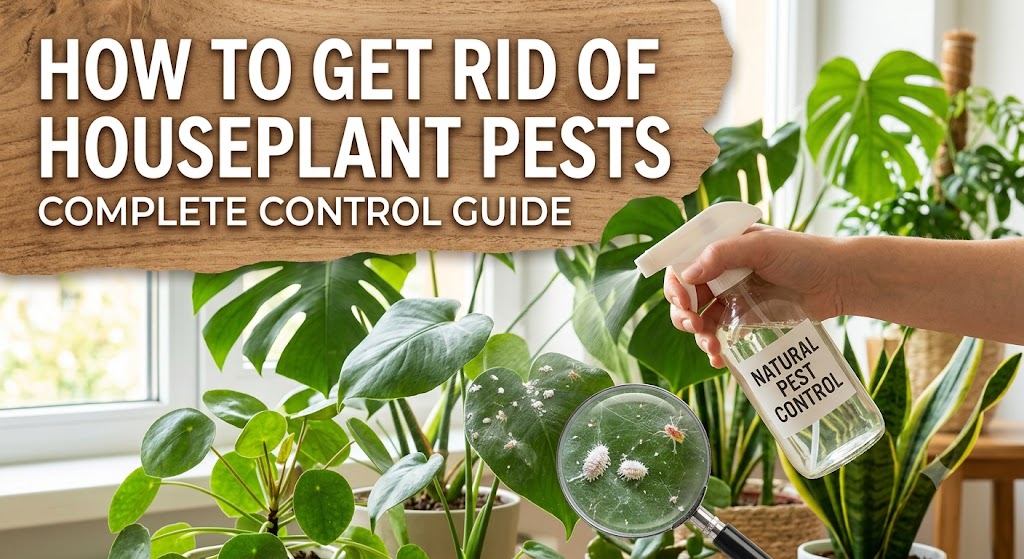
Few things are more frustrating than spotting tiny bugs crawling on your favorite houseplant’s leaves. Houseplant pests like spider mites, aphids, fungus gnats, and mealybugs can spread quickly, weakening your plants and even spreading to others nearby if left untreated.
The good news is that most infestations are easy to control once you know what you’re dealing with. Learning how to get rid of houseplant pests before they take over your entire home requires a mix of early detection, physical intervention, and targeted remedies. In this article, we’ll walk you through how to identify common houseplant pests, natural and chemical methods to get rid of them, and simple habits to keep them from coming back. Let’s dive in!
The Golden Rules of Prevention: Stop Pests Before They Start
The easiest infestation to manage is the one that never happens. Many indoor gardeners assume bugs simply materialize out of thin air, but they almost always enter your home via a specific entry point: a newly purchased plant, an outdoor vacation, open windows, or unsterilized soil. Incorporating a few simple habits into your regular plant care routine will save you months of spraying, wiping, and stress later down the line.
This is especially important if you’re gardening in a small apartment, where plants often sit close together — our guide on how to make a garden in an apartment with no balcony covers setup tips that also help with airflow and spacing between plants.
The One-Month Quarantine Protocol
When you bring a new plant home from the nursery or a big-box store, it is tempting to immediately place it in its permanent, picture-perfect spot next to your other green beauties.
Always isolate newly arrived plants in a completely separate room for at least three to four weeks. Many common houseplant insects lay microscopic eggs or have immature life stages that hide deep within the soil or root ball. A plant can look entirely healthy at the garden center but explode with an active infestation two weeks later. During this quarantine period, inspect the newcomer under bright light every few days. Only introduce it to the rest of your collection once you are completely certain no hidden hitchhikers are lurking on the stems or undersides of the leaves.
The Danger of Reusing Outdoor Soil
If you need to repot a houseplant, never scoop up soil from your outdoor garden beds or reuse old, open bags of potting mix that have been sitting on your patio all winter. Outdoor soil is a living ecosystem filled with fungus gnat larvae, root aphids, predatory mites, springtails, and centipedes. While these organisms play an important role outdoors, they quickly become an unmanageable nuisance inside the closed environment of your home.
Always invest in a high-quality, sterile commercial indoor potting mix. Keep your open bags of soil tightly sealed in plastic bins indoors to prevent stray insects from finding their way inside to lay eggs.
Minimize Environmental Stress
Insects are opportunistic creatures. They are hardwired to target weakened, stressed, or struggling hosts because stressed plants have compromised natural defenses. A plant that is consistently overwatered, underwatered, or starved of adequate sunlight will succumb to a pest attack much faster than a vigorously growing specimen.
Make sure you are matching each plant to its ideal environmental conditions. Provide sufficient light, use pots with excellent drainage holes, and avoid letting your plants sit in stagnant water collected in their saucers. The healthier your indoor garden is on a foundational level, the easier it will be to fight off accidental infestations. Choosing naturally hardy, low-maintenance houseplants from the start also reduces pest vulnerability, since these varieties tend to tolerate the occasional missed watering or low-light spot without the stress that invites bugs in the first place. Browse our list of best low maintenance plants for office spaces for some resilient options.
How to Identify Your Unwanted Guests
You cannot fight what you do not understand. Before grabbing a spray bottle or throwing a prized plant into the trash, you must identify the exact insect causing the damage. Different bugs respond to completely different treatments. Using the wrong approach will waste your time and potentially damage your plant’s delicate foliage. Here is a breakdown of the most common indoor pests you are likely to encounter.
1. Fungus Gnats (The Flying Annoyances)
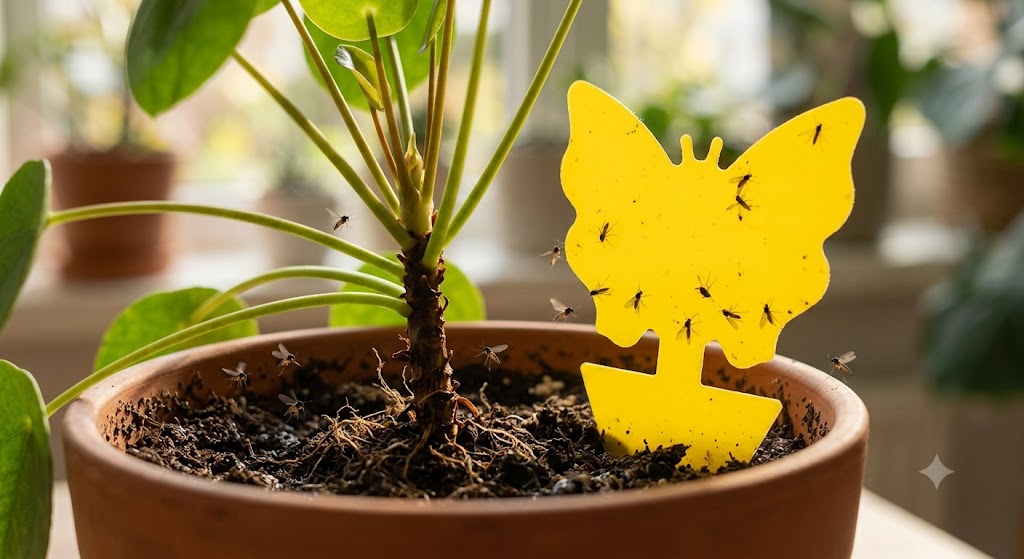
Fungus gnats are arguably the most common and recognizable houseplant nuisance. The adults are tiny, delicate, dark-winged flies that resemble miniature mosquitoes. They do not bite humans or pets, but they love to fly directly into your face or hover around your coffee mug.
- Where to find them: Adults flutter around the base of the plant or crawl along the surface of the soil. The larvae, which are small, translucent worms with distinct black heads, live just beneath the top layer of the potting mix.
- The damage: Adult gnats are primarily a cosmetic nuisance. However, the subterranean larvae feed heavily on decaying organic matter, fungi, and the tender root hairs of your plants. A severe infestation can stunt the growth of young seedlings or cause root rot in mature plants.
- The cause: Fungi gnats thrive in consistently wet, organic-rich soil. Overwatering is the primary catalyst for a fungus gnat population explosion.
2. Mealybugs (The Cotton-Ball Mimics)
Mealybugs are soft-bodied, slow-moving insects that look like tiny, fuzzy white woodlice. They cover themselves in a powdery, waxy secretion that protects them from drying out and shields them from light contact sprays.
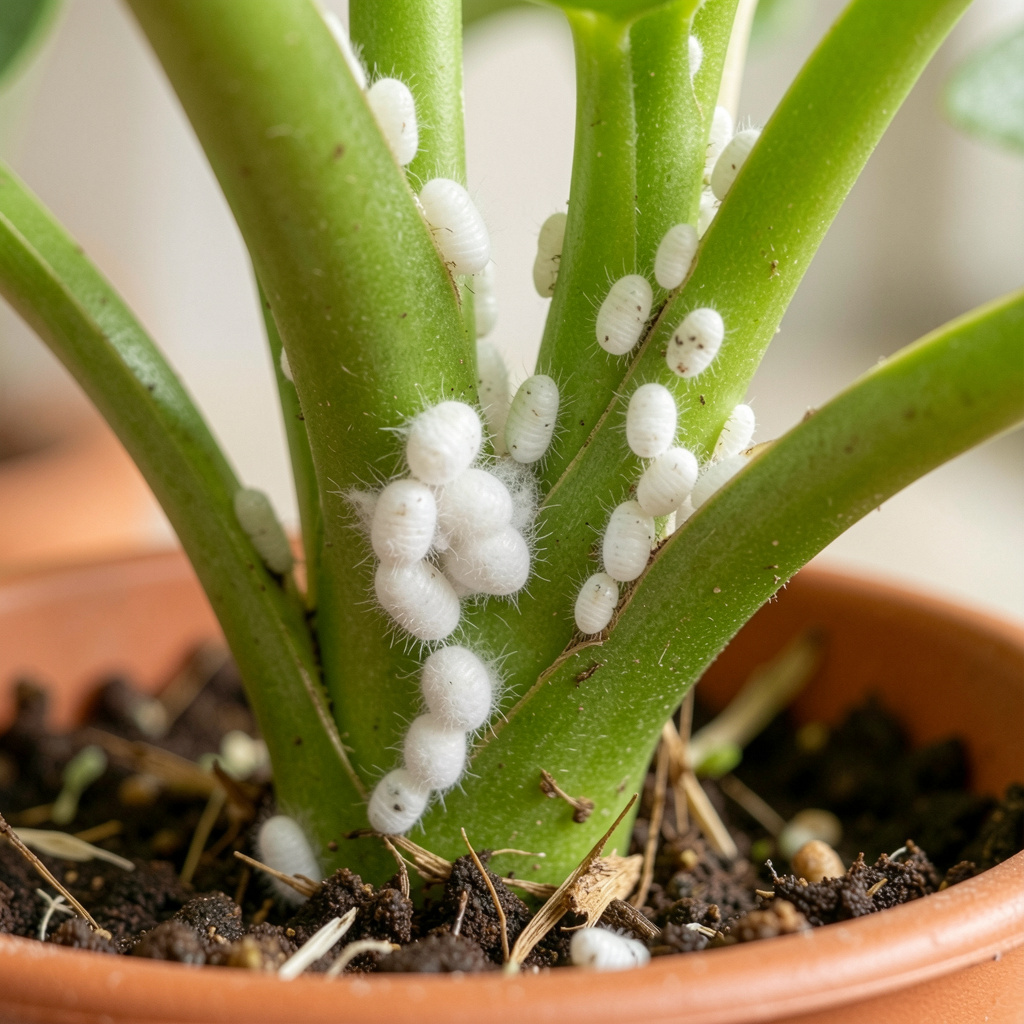
- Where to find them: Mealybugs love to hide in the most inaccessible nooks and crannies of a plant. Look closely at the leaf axils (where the leaf meets the main stem), under the rims of plastic pots, deep within new, unfurling leaves, and along the undersides of major leaf veins.
- The damage: These insects use their sharp, piercing-sucking mouthparts to puncture plant tissue and drain the sap. As they feed, they excrete a sticky, sugary fluid known as honeydew. Over time, mealybug feeding causes yellowing leaves, severe wilting, and systemic leaf drop.
3. Spider Mites (The Invisible Web-Weavers)
Spider mites are not true insects; they are tiny arachnids related to spiders and ticks. They are incredibly small—about 1/50th of an inch—and are practically invisible to the naked eye until their population reaches numbers in the thousands.
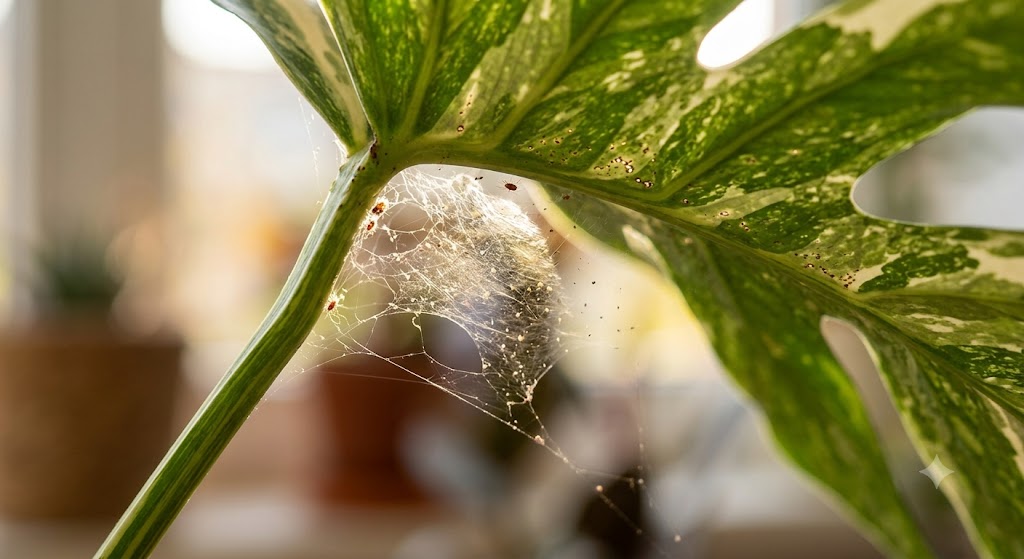
- Where to find them: You will usually spot the symptoms of spider mites before you see the creatures themselves. Look for fine, delicate silken webbing spun across the undersides of leaves, around the tips of new growth, and between stems.
- The damage: Spider mites pierce individual plant cells to suck out the chlorophyll. This leaves behind a distinct, fine speckled pattern on the foliage, often referred to as stippling or mottling. As the infestation advances, the leaves turn a dull greyish-bronze color, dry out completely, and drop off the plant.
- The cause: Spider mites love hot, dry, and stagnant air. They reproduce with frightening speed in dry environments, making them a major problem during the winter months when home heating systems dry out indoor air.
4. Scale Insects (The Immobile Bumps)
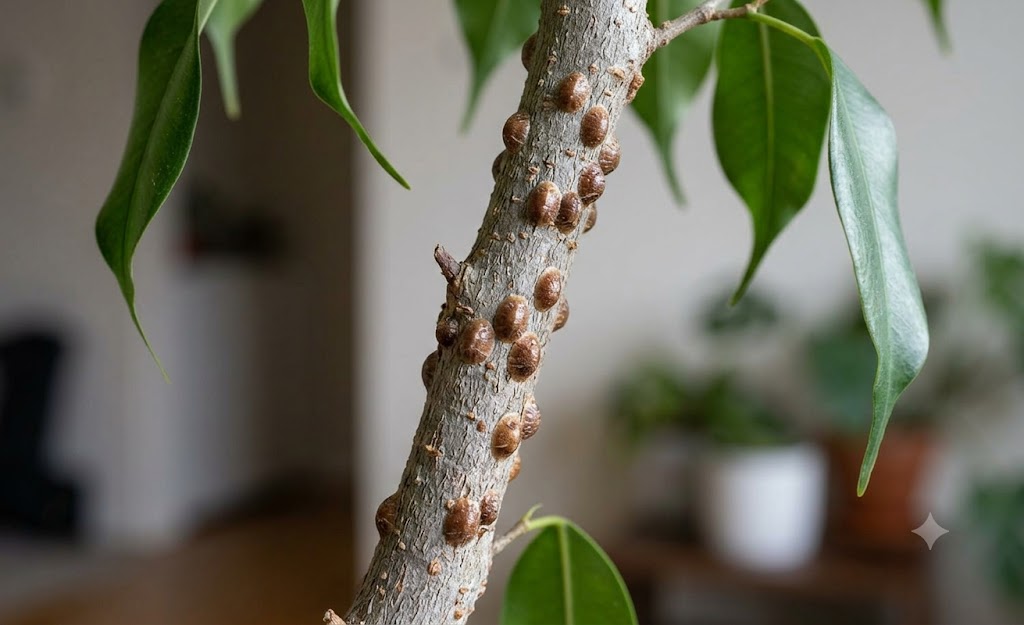
Scale insects are incredibly unique because the mature adults do not look like bugs at all. Instead, they look like small, raised, brown or tan oval bumps stuck tightly to the stems and leaves of your plants. They are completely immobile once they reach maturity, locking themselves down in one spot to feed for the rest of their lives.
- Where to find them: Look along woody or semi-woody stems, tucked tightly against the mid-veins of mature leaves, and along the undersides of smooth-leaved plants like ficus, citrus, and ferns.
- The damage: Like mealybugs and aphids, scale insects suck large quantities of sap out of the plant, producing massive amounts of sticky honeydew. Because they are protected by a hard, shell-like waxy coating, they are highly resistant to traditional contact insecticides. Left unchecked, they will slowly sap a plant’s vitality until the branches die back.
5. Aphids (The Sap-Sucking Multiplying Machines)
Aphids are small, pear-shaped, soft-bodied insects that come in a wide range of colors, including green, black, yellow, and pink. They have relatively long legs and prominent antennae, and they are capable of reproducing without mating, giving birth to live clones of themselves daily.
- Where to find them: Aphids gravitate toward succulent, tender new growth. You will find them clustered thickly around freshly opening flower buds, young tips, and the undersides of soft leaves.
- The damage: Heavy aphid feeding causes severe distortion, curling, and puckering of new foliage. They also excrete large volumes of honeydew, causing sticky messes on nearby furniture and floors.
6. Whiteflies (The Ghostly Fliers)
Whiteflies are tiny, moth-like insects with powdery white wings. While the adults fly away in a cloud whenever the plant is disturbed, the immature nymphs are flat, oval, translucent scale-like structures that remain completely stationary on the foliage.
- Where to find them: Whiteflies are almost exclusively found on the absolute undersides of leaves. They are especially drawn to soft-leaved, tropical houseplants like hibiscus, poinsettias, and ivy.
- The damage: They sap nutrients from the plant, cause extensive honeydew buildup, and are notorious vectors for spreading plant viruses from one specimen to another.
7. Thrips (The Silver-Leaf Saboteurs)
Thrips are tiny, slender, needle-like insects that are typically dark brown or black as adults and pale yellow as nymphs. They are incredibly active, fast-moving, and can be difficult to catch in the act.
- Where to find them: Thrips feed within the leaf tissue itself, crawling rapidly across both the top and bottom surfaces of the leaves when disturbed.
- The damage: Thrips have a unique “punch and suck” feeding style. They rasp open the outer layer of the leaf and lap up the pooling cell contents. This destroys the leaf texture, leaving behind distinctive, irregular silvery-translucent patches flecked with tiny dots of black, tar-like fecal matter. Thrips can ruin the appearance of an entire plant in a matter of weeks.
Step-by-Step Diagnostic Routine
To catch infestations early, get into the habit of performing a thorough plant inspection every time you water. You do not need expensive scientific equipment to be an effective plant doctor—just a few simple tools and a bit of focus.
[Inspection Checklist]
- Check the absolute undersides of at least three mature leaves.
- Inspect the nodes and leaf axils along the main stem.
- Look closely at the newest, unfurling leaf tips.
- Scan the topsoil surface and check inside the bottom drainage holes.
- Inspect the inner rim of the decorative pot or saucer.
A basic ten-power (10x) magnifying hand lens or a magnifier app on your smartphone is incredibly helpful for spotting microscopic spider mites or thrips. Look out for unexpected signs of trouble: a sudden loss of lower leaves, a dull look to the foliage, or a sticky residue on the top surfaces of leaves or surrounding tabletops.
If you suspect a pest is living in the soil, gently slide the plant out of its nursery pot and examine the outer edges of the root ball. Root mealybugs or fungus gnat larvae can often be spotted congregating along the damp interface between the roots and the plastic pot wall.
Physical and Cultural Elimination Tactics
When you discover a pest problem, your immediate reaction might be to spray the strongest chemical insecticide you can buy. However, the most successful approach relies on physical and cultural treatments first. These non-toxic methods drastically reduce the pest population immediately, making any subsequent treatments far more effective.
The Jet Stream: Syringing and Washing Foliage
For soft-bodied pests like aphids, spider mites, and whiteflies, a simple blast of clean water is your best first line of defense. Take smaller plants directly to the kitchen sink, or carry larger plants into the shower.
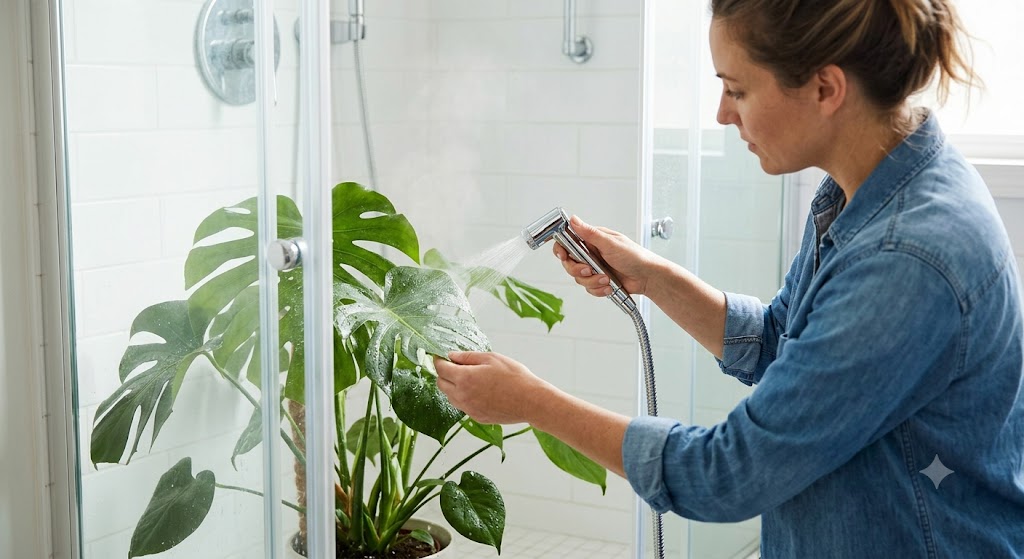
Using a spray attachment with lukewarm water, thoroughly wash down the entire plant. Direct the spray upward to hit the undersides of the leaves forcefully. The water pressure mechanically dislodges and drowns thousands of adult insects, nymphs, and eggs. Just make sure the pressure is not so intense that it tears the plant’s leaves or washes the soil out of the pot. Wrapping the base of the pot in plastic wrap or aluminum foil before showering can help keep the potting mix securely inside the container.
The Alcohol Swab Strike
For localized infestations of mealybugs or scale insects, ordinary household rubbing alcohol (isopropyl alcohol) is an incredibly precise weapon.
Dip a cotton swab, Q-tip, or a small makeup pad into the rubbing alcohol and touch it directly to the visible insects. The alcohol instantly dissolves the protective waxy coating of the mealybug or scale, drying them out and killing them on contact. Once the bug turns a dull yellowish-brown color, use the swab or a damp paper towel to gently wipe it away from the plant stem.
Important Note: Rubbing alcohol can burn the leaves of sensitive houseplants. Avoid spreading large quantities of pure alcohol across wide areas of delicate foliage.
Submerging and Dunking
If a plant is small and heavily infested with spider mites or aphids, you can submerge the upper foliage entirely in a bucket of tepid water for one to two hours. Most land-dwelling insect pests cannot survive prolonged submersion and will drown, while the plant itself can easily tolerate a few hours underwater without issue.
Pruning and Sacrificing
If an infestation is completely isolated to a single branch, a few older leaves, or a specific cluster of flower buds, the most practical solution is to prune those affected parts away entirely. Use a pair of sharp, sterile pruning shears to clip off the heavily infested areas. Seal the clippings immediately in a plastic bag and dispose of them in your outdoor trash bin. Always clean your shears with rubbing alcohol between cuts to avoid transferring stray insects or diseases to healthy parts of the plant.
Organic and Chemical Solutions: Your Arsenal
If physical removal does not completely clear the infestation, it is time to introduce targeted topical remedies. When selecting a product, always read the label carefully to ensure it is explicitly registered for indoor use on houseplants.
Insecticidal Soaps
Commercial insecticidal soaps are formulated from potassium salts of fatty acids. They work by penetrating and disrupting the cellular membranes of soft-bodied insects, causing them to dehydrate rapidly and die.
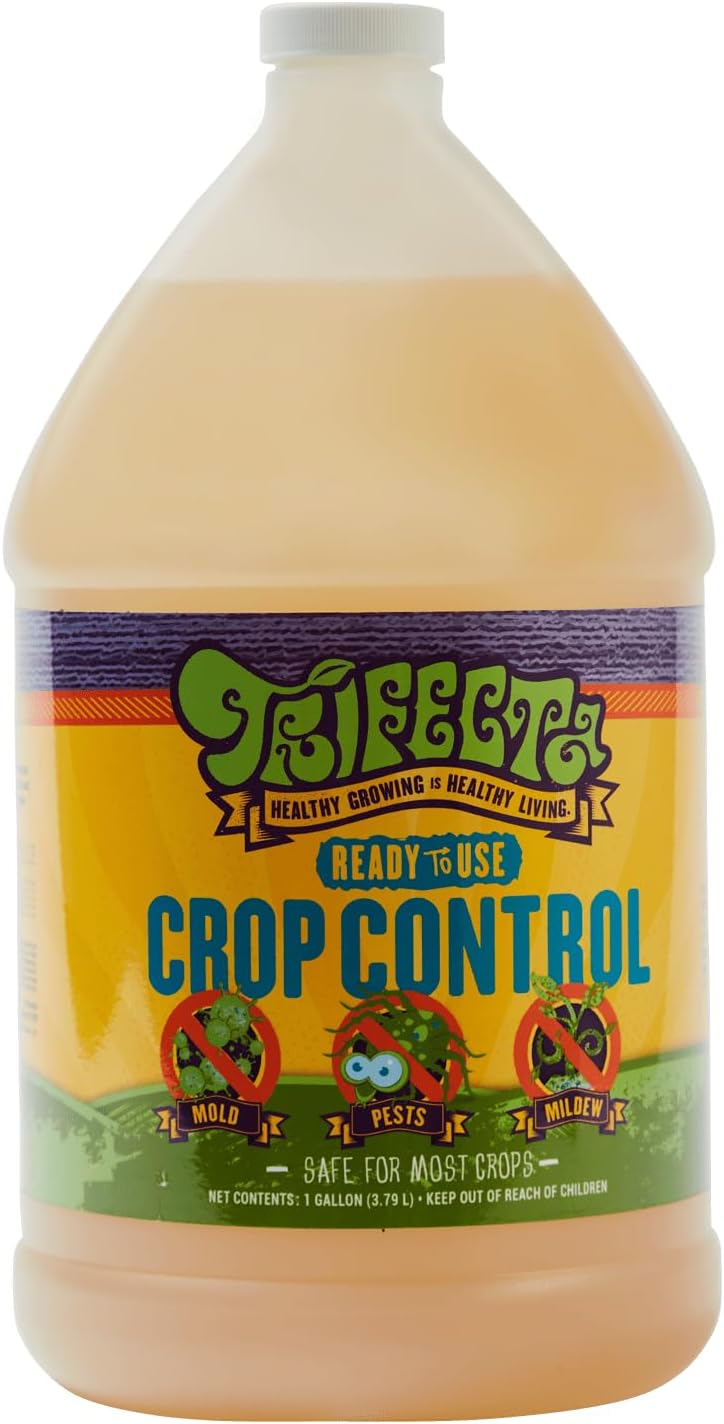
- Best for: Aphids, spider mites, thrips, whiteflies, and immature scale crawlers.
- Application: Insecticidal soap is a contact killer, meaning it must physically touch the insect to work. It offers no residual protection once it dries. Mix the soap according to the package directions (typically a 1% to 3% concentration) and spray the plant thoroughly until it is dripping wet, paying special attention to the undersides of the leaves. Repeat the treatment every 5 to 7 days for three consecutive weeks to kill newly hatched generations.
Neem Oil Extract
Neem oil is a natural, organic botanical extract derived from the seeds of the neem tree (Azadirachta indica). Clarified hydrophobic extract of neem oil works by smothering insects on contact, while its active compound, azadirachtin, acts as an insect growth regulator. It disrupts the hormonal systems of immature insects, preventing them from molting, growing, and laying viable eggs.

- Best for: Broad preventative care, mealybugs, thrips, spider mites, and whiteflies.
- Application: Apply neem oil in the evening or move the treated plant away from bright windows for 24 hours after spraying. The combination of oil on the leaves and intense, direct sunlight can cause severe foliage burn.
Diatomaceous Earth (DE)
Diatomaceous earth is a natural, powdery dust made from the fossilized remains of microscopic, aquatic organisms called diatoms. To the human touch, it feels like soft flour, but on a microscopic level, it consists of incredibly sharp, jagged silica shards.

- Best for: Fungus gnat larvae, thrips that pupate in the soil, and crawling pests like springtails.
- Application: Sprinkle a thin, even layer of food-grade diatomaceous earth directly over the dry surface of your houseplant’s potting soil. When crawling insects come into contact with the dust, the sharp edges slice through their protective waxy cuticles, causing them to dry out and die. Keep in mind that DE becomes completely ineffective when it gets wet, so you will need to reapply a fresh, dry layer after every watering session.
Systemic Treatments
Systemic insecticides work from the inside out. Instead of coating the exterior foliage, these products (typically containing the active ingredient imidacloprid) are applied directly to the potting mix as dry granules and watered thoroughly into the soil. The plant’s root system absorbs the insecticide, distributing it throughout the entire vascular network of the stems and leaves. When a sap-sucking insect bites into the plant, it ingests the toxin and dies.
- Best for: Severe, widespread infestations of mealybugs, scale, aphids, and thrips.
- Application: Systemic granules provide long-lasting protection, often keeping plants pest-free for up to two to three months with a single application.
Environmental Safety Warning: Many systemic pesticides are highly toxic to bees and other beneficial pollinators. If you plan to move your indoor tropical plants or citrus trees outside to your patio for the summer months, do not use systemic treatments. Stray pollinators visiting any flowers on those plants can ingest the toxin, causing severe harm to local bee populations.
Pest Control Treatment Comparison Table
Choosing the right tool for the job saves time and protects your plants from unnecessary chemical stress. Use this quick-reference table to match your pest problem to the most effective solution.
| Treatment Method | Best Target Pests | Action Type | Residual Effect | Plant Safety Notes |
| Insecticidal Soap | Aphids, Mites, Thrips | Contact Killer | None (Must wet the bug) | Safe for most; test sensitive ferns first. |
| Neem Oil Extract | Mites, Whiteflies, Mealybugs | Smothering & Growth Regulator | Mild (1–3 days) | Can cause leaf burn if exposed to direct sun. |
| Rubbing Alcohol | Mealybugs, Mature Scale | Contact Disruption | None (Evaporates instantly) | Apply directly to bugs; avoid wide leaf washes. |
| Diatomaceous Earth | Fungus Gnat Larva, Thrips | Mechanical / Abrasive | Long-lasting (Only when dry) | Do not inhale dust during application. |
| Systemic Granules | Mealybugs, Scale, Thrips | Systemic Ingestion | High (Up to 8–12 weeks) | Do not use if plant goes outdoors in summer. |
Post-Treatment Rehab and Long-Term Protection
Defeating the active insects is only half the battle. Once the pest population is under control, your houseplant will be exhausted, physically damaged, and vulnerable to secondary fungal or bacterial infections. Transitioning your focus to long-term rehabilitation ensures the plant bounces back quickly and develops the strength to resist future attacks.
Clean the Foliage Regularly
Insects love dusty leaves because dust provides excellent cover and traps moisture close to the leaf surface. Make a habit of wiping down smooth-leaved houseplants every two weeks with a soft, damp microfiber cloth.
This keeps the foliage looking beautiful, maximizes the plant’s ability to photosynthesize efficiently, and physically removes any stray crawler insects before they can establish a colony. Never use commercial leaf shine products, mineral oil, or milk to shine your leaves; these substances clog the plant’s stomata (breathing pores), trapping dust and suffocating the plant tissue.
Adjust Your Water Routine
If you just finished a long battle with fungus gnats, change your watering habits immediately. Allow the top two to three inches of potting soil to dry out completely between waterings. You can check the moisture levels by sticking your finger into the soil or using an inexpensive wood chopstick. If the soil surface remains dry, fungus gnat larvae cannot survive, and adult gnats will look elsewhere to lay their eggs.
Consider bottom-watering your plants by setting the pot in a shallow tray of water for 20 minutes, allowing the roots to drink while keeping the top layer of soil completely dry.
Gentle Fertilization
Do not rush to apply a heavy dose of high-nitrogen fertilizer immediately after a pest infestation. While you want to encourage new growth, heavy nitrogen fertilization creates soft, flush, succulent green tissues that are incredibly attractive to aphids and mealybugs.
Wait until you see clear signs of natural recovery, such as new leaf nodes or healthy root tips. When you do resume feeding, use a balanced, water-soluble organic fertilizer mixed at half or one-quarter of the recommended label strength to avoid burning the recovering root system.
Ultimately, managing pests is simply part of the rhythm of indoor gardening. By checking your plants frequently, acting quickly at the first sign of webbing or spots, and using targeted, gentle treatments, you can keep your indoor jungle thriving, healthy, and beautiful for years to come.
People Also Ask (FAQs)
Yes. Most common houseplant pests — including spider mites, aphids, and mealybugs — spread easily between plants that are placed close together or share the same watering tray. Isolating a newly infested plant immediately is the best way to protect the rest of your collection.
No. Fungus gnats, spider mites, mealybugs, and the other plant pests covered in this guide feed exclusively on plant tissue and sap. They don’t bite people or animals and pose no health risk, though large fungus gnat populations can become an annoying household nuisance.
Neem oil typically takes 7 to 14 days to noticeably reduce a pest population, since it works primarily by disrupting insect growth and reproduction rather than killing on contact. Most infestations require 2 to 3 applications spaced about a week apart for full control.
A heavily diluted mixture of a few drops of mild, unscented dish soap in water can work in a pinch on soft-bodied pests like aphids, but commercial insecticidal soap is formulated specifically for plant safety and is less likely to strip protective leaf waxes or cause burn.
Recurring infestations usually mean the eggs or larvae survived the first treatment round, or an untreated source plant nearby is reinfecting your collection. Repeating treatments every 5-7 days for at least three weeks, and quarantining new plants, is key to breaking the cycle for good.
Final Thoughts: Embracing the Rhythm of Plant Care
Dealing with houseplant pests can be incredibly frustrating, but it is important to remember that an occasional infestation is simply a normal part of the indoor gardening journey. The secret to a thriving indoor jungle isn’t necessarily achieving a completely bug-proof home—it is establishing a routine of early detection, proper identification, and swift, targeted action.
By staying consistent with your quarantine protocols, inspecting your collection closely during routine waterings, and giving recovering plants the patience and gentle care they need to bounce back, you can easily keep any pest population under control. Don’t let a few unwanted bugs discourage you; with the right tools and habits, your plants will continue to grow healthy, vibrant, and beautiful for years to come.